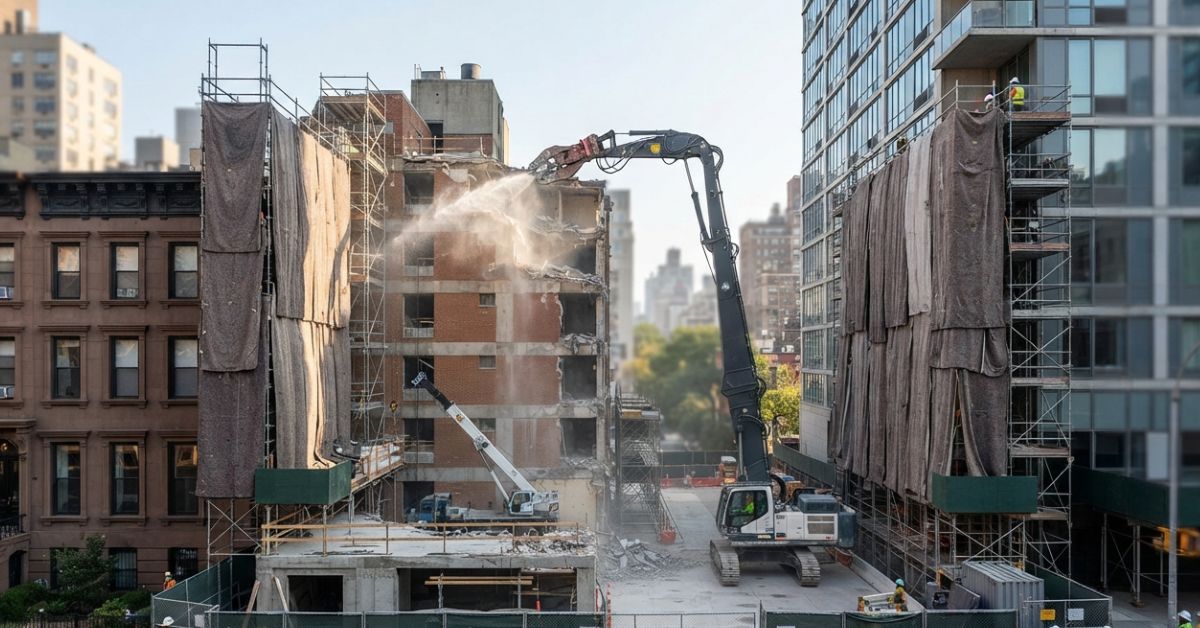
Taking down a building gets more complicated when another structure is only a few feet away. There may be active utilities below the site, traffic passing nearby, or part of the existing building that needs to stay exactly where it is. One wrong move can affect much more than the structure being removed.
Specialized demolition is built around those conditions. Instead of relying on force alone, crews study the site, choose equipment for the space available, and decide how each section will come down. This level of planning helps keep the work inside the intended demolition area while protecting the property and infrastructure around it.
Why Demolition Near Existing Structures Requires More Control
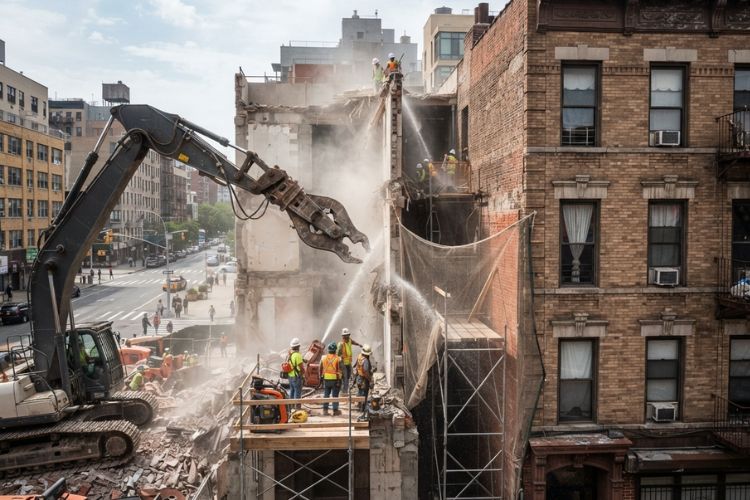
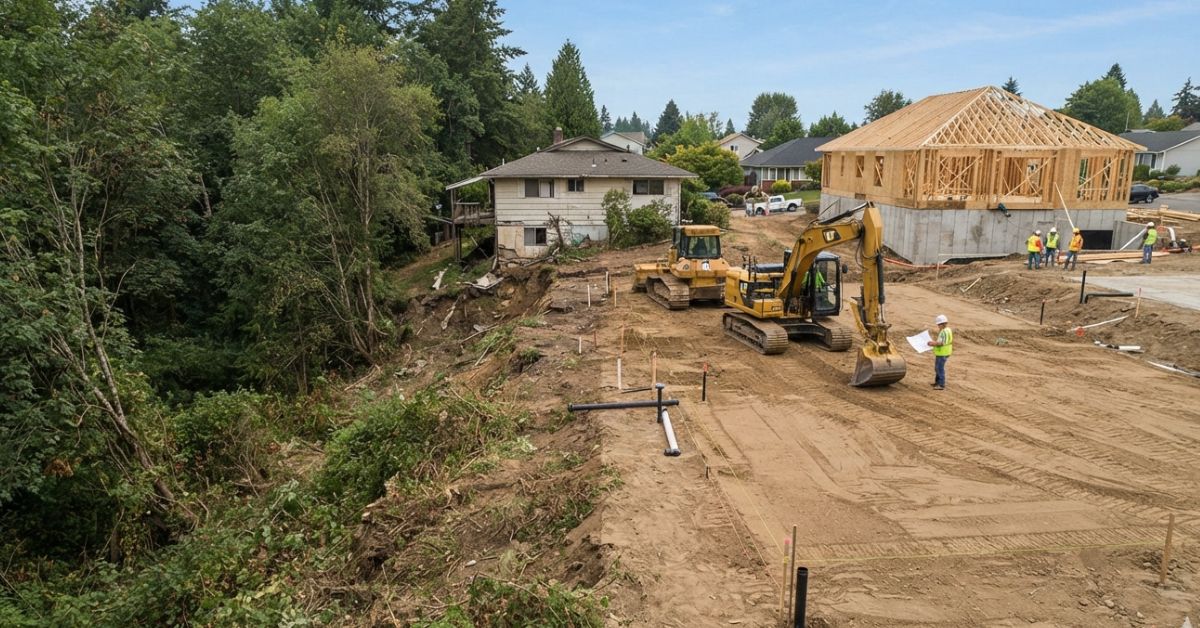
An open demolition site gives equipment room to move and debris more space to be handled. A tight site does not offer that freedom. Nearby buildings, roads, utility lines, fences, and other improvements can all limit how the work is approached.
This is where controlled demolition becomes important. The crew has to consider what surrounds the structure before deciding where equipment will operate or where demolished material will go. On some projects, even the order in which individual sections are removed can make a difference.
What Can Put Nearby Property at Risk?
Damage during demolition is not always as obvious as debris hitting the building next door. Heavy equipment, falling material, and removing the wrong section too early can all cause trouble outside the demolition area.
Vibration From Heavy Equipment
Breaking concrete creates a lot of force, and some of it can travel through the ground. How much reaches a nearby building depends on the equipment, the soil, and how close the property is. On sensitive sites, specialized demolition services may use a different removal method or keep track of vibration while the work is going on.
Falling and Flying Debris
Once demolition gets underway, broken material has to go somewhere. Pieces of concrete, brick, or metal can bounce or fall beyond the work area and damage whatever is close by. Crews may set up barriers and choose specific areas for bringing material down so nearby buildings, vehicles, and equipment are not caught in the path.
Loss of Structural Support
Not every wall or floor stands on its own. Some sections rely on the parts around them for support, so taking something out in the wrong order can leave the remaining structure unstable. In those situations, crews may shore up or brace the section that is staying before continuing with the removal.
Inspect the Site Before Anything Comes Down
Good demolition work starts before equipment reaches the structure. Crews need to understand the condition of the building, nearby properties, foundations, access points, and utilities.
Existing cracks or weak areas also matter. Documenting them gives the project team a clearer picture of site conditions before work begins.
Planning demolition services around this information helps determine equipment access, safe work zones, and the removal sequence. It also gives crews time to address site limitations before they become problems in the middle of the job.
Take the Structure Down in the Right Order
Demolition is not simply a matter of finding the easiest section to reach first. Removing the wrong component too early can affect stability or make later work harder.
Plan the Demolition Sequence
A planned sequence gives crews a clear direction for the job. Sections can be removed in stages so equipment has room to operate and debris can be handled without interfering with areas that are still standing. This is a key part of controlled demolition, particularly when there is little room between the work and surrounding property.
Support Areas That Need to Remain
Some projects leave part of an existing building in place. Selective demolition focuses on removing only the specified components while protecting the sections that will remain.
That may require temporary supports before walls, floors, or structural members are removed. Care at this stage can prevent movement from spreading into areas outside the demolition scope.
Use More Precise Methods Near Sensitive Areas
Some parts of a demolition job need a lighter touch. When crews are working close to another building or in a narrow space, smaller machines, careful cutting, or taking sections apart piece by piece may work better than bringing in heavy equipment.
Modern demolition technology also helps contractors match the method to the conditions instead of approaching every structure the same way.
This is where specialized demolition differs from straightforward removal. Crews can adjust the method as they move through different parts of the structure, using heavier equipment where there is enough room and more precise techniques where the margin for error is smaller.
Control Vibration Before It Reaches Nearby Structures
A nearby building can feel demolition work even when no debris reaches it. Breaking concrete and dropping heavy material can send movement through the ground, especially when structures are close together.
Crews can limit that impact by changing the equipment, breaking smaller sections, or adjusting how material is brought down. The approach may change as the work moves from an open area to a section closer to another building.
On sensitive sites, vibration may also be monitored while the work is underway. Specialized demolition takes these conditions into account before heavier removal begins, rather than dealing with vibration after it becomes a problem.
Protect Utilities and the Surrounding Work Area
Buildings are connected to more than what can be seen above ground. Gas, water, electricity, sewer, and communication lines may run through or beside the demolition area.
Locate and Secure Utilities
What is underground can be just as important as the building coming down. Power cables, water pipes, gas lines, and other services may cross the demolition area, sometimes continuing on to another property.
Before heavy work begins, crews need to know where those lines are and which ones must remain active. Demolition services can then be planned around them, reducing the chance of hitting a line and bringing the job to an unexpected stop.
Keep Dust and Debris Contained
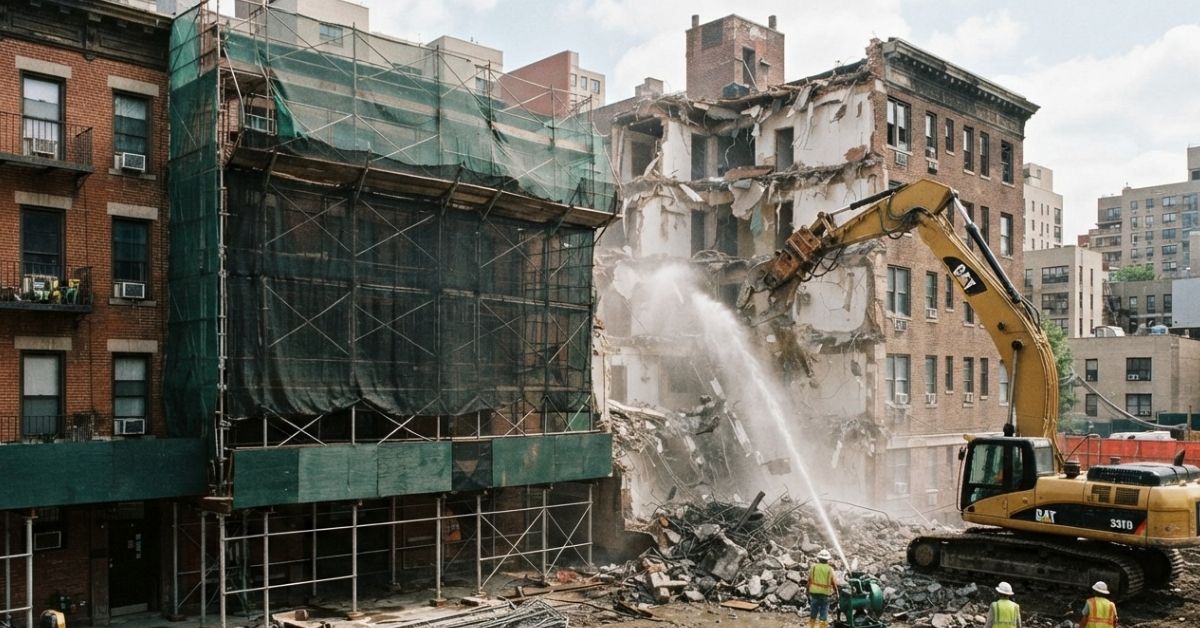
A wall coming down creates more than a pile of rubble. Fine dust can drift toward nearby properties, while small pieces of broken material may spread beyond the area where crews are working.
Water can be used to settle dust, while barriers help keep loose material from traveling across the site how debris is handled also matters, especially when there is not much space between the demolition work and the property next door.
Specialized Demolition Can Prevent Expensive Rework
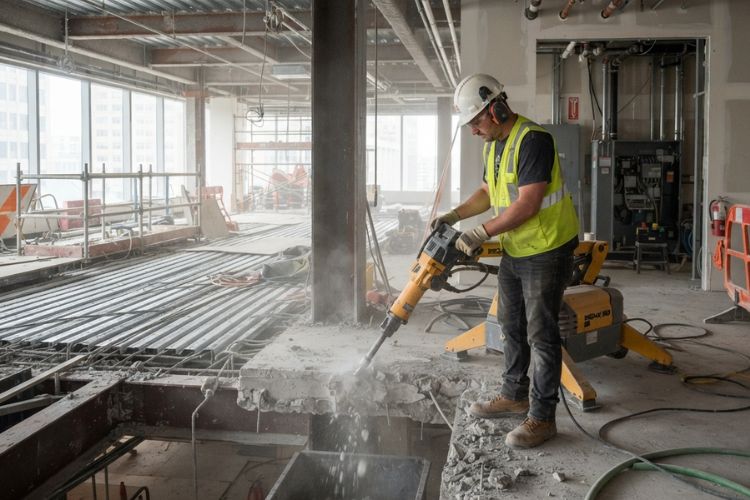
The demolition crew may finish its part of the job, but damage left behind can cause problems for everyone coming in next. A broken utility line, damaged pavement, or cracked adjoining wall can stop other work until repairs are made.
Selective demolition can also make sense when only part of a structure needs to be removed. Keeping usable sections in place means less material to tear out and less work to rebuild afterward.
With specialized demolition, crews focus on removing what the project calls for while avoiding unnecessary damage around it. That can keep repair work from being added to the schedule and leave the site in better condition for the next phase.
Conclusion
Specialized demolition is less about how quickly a structure can come down and more about keeping the work where it belongs. Careful sequencing, vibration control, utility planning, and precise removal can protect nearby property while keeping the project moving.
If you’re looking for an experienced team for demolition work, J.E. Shurden Construction provides professional solutions based on the needs and conditions of each site. The team handles the work with care while preparing the property for the next stage of construction.
FAQs
What is specialized demolition?
It is a planned approach to removing structures or specific sections while accounting for nearby buildings, utilities, access limits, and other site conditions.
Can demolition damage nearby buildings?
Yes, especially when buildings are close to the work area. Heavy vibration, falling debris, or removing a connected section can sometimes affect the property next door.
How do contractors control vibration?
Crews can change the equipment they use, break material into smaller sections, or adjust the order of the work. On sensitive sites, they may also monitor vibration as demolition moves forward.
What is controlled demolition?
Controlled demolition uses planned methods and sequencing to keep structural removal and debris within the intended work area.
How are utilities protected?
Utility locations are identified before work begins. Lines may then be disconnected, secured, relocated, or protected depending on the project and whether they need to remain active.