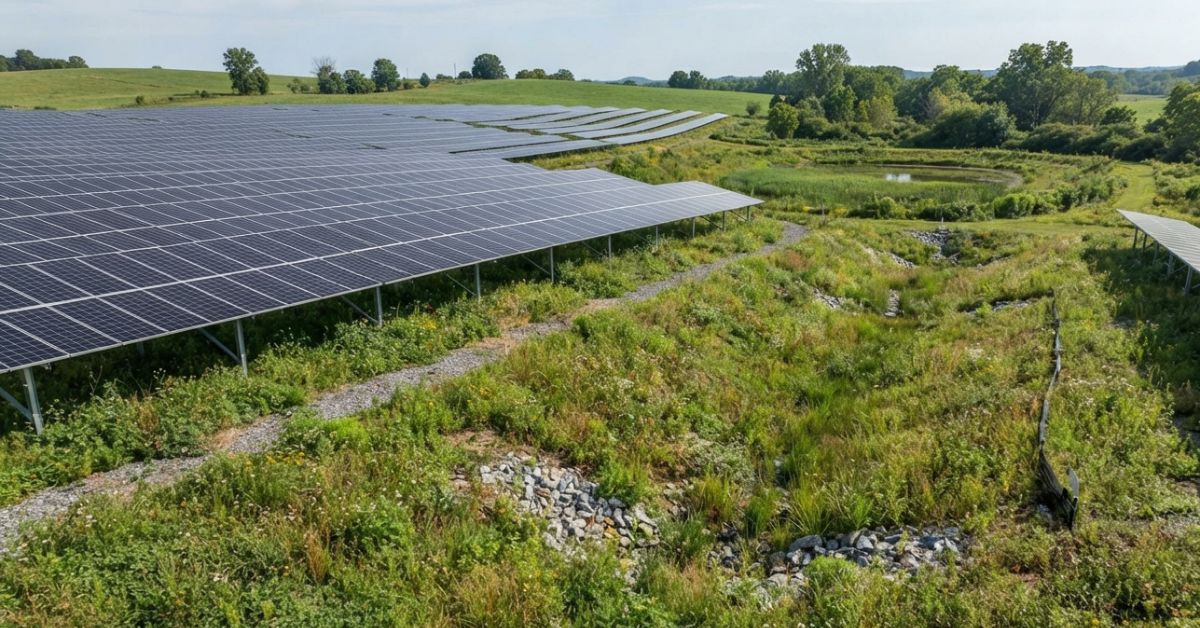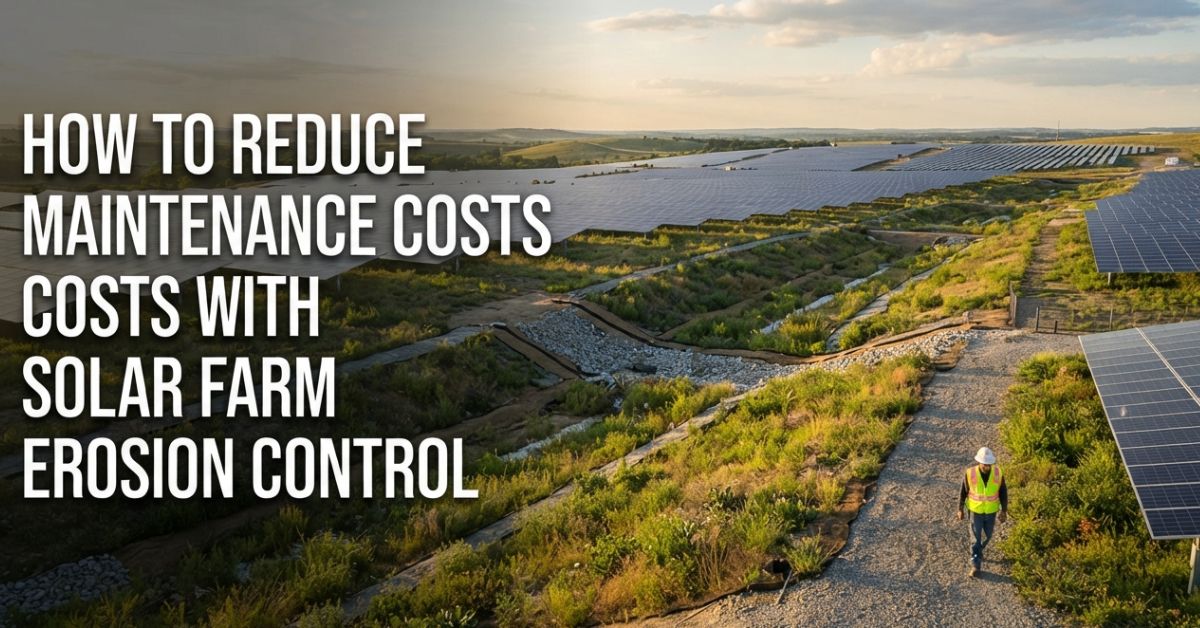
A solar farm is built for long-term energy production, but the land beneath and around the panels needs ongoing attention. Heavy rain, exposed soil, slopes, and concentrated water flow can gradually damage roads, drainage features, and other parts of the site.
When erosion keeps happening, crews may have to regrade washed-out areas, clear sediment, reseed bare ground, or repair damaged roads. Taking care of Solar erosion control early can help prevent these smaller problems from turning into bigger, more expensive repairs.
Why Erosion Can Become an Expensive Solar Site Problem
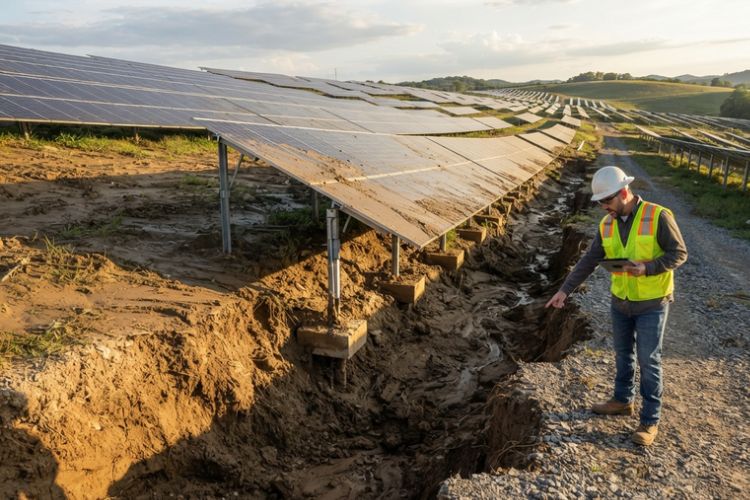
Building a solar farm can change how rainwater moves across the land. Clearing, grading, trenching, and heavy equipment can leave parts of the ground exposed. Once the panels are in place, rain may also collect and run off more heavily in certain spots.
Without proper Solar farm runoff control, that water can carry loose soil with it. Small channels may form, sediment can collect in drainage areas, and roads or slopes may start washing out. Solar erosion control helps keep the soil in place and water moving where it should.
These problems can become more expensive when they keep happening in the same areas. Crews may have to bring in gravel, repair roads, clear drainage areas, or reseed bare ground after heavy rain. Taking care of erosion early can cut down on this repeat work.
Small Soil Problems Can Create Bigger Maintenance Bills
Erosion often starts with something as small as a patch of bare soil. After a few heavy rains, water may begin cutting a path through that spot, carrying more soil away each time. Before long, crews may have a much bigger area to repair.
The problem does not always stay in one place. Loose soil can wash into ditches and basins, damage access roads, or leave slopes uneven. Using the right erosion control solutions early can help keep these problems from coming back after every storm.
Washed-Out Roads Affect More Than Site Appearance
Access roads allow technicians, maintenance vehicles, and equipment to move around a solar facility. When runoff cuts across these roads, it can create ruts, wash away aggregate, soften shoulders, and make sections harder to travel.
Repairs may require new material, grading, compaction, and additional labor. Preventing water from repeatedly crossing vulnerable road sections is an important part of Solar farm cost reduction, especially on large sites where access routes cover considerable distances.
Sediment Creates Recurring Drainage Work
Soil carried by runoff eventually settles somewhere else. It may collect inside swales, culverts, ditches, or sediment basins and reduce the amount of water those features can manage during the next storm.
Clearing sediment may get the water moving again, but the same buildup can return if soil keeps washing in from another part of the site. Fixing the area where the soil is coming loose can mean fewer cleanouts and less work to keep ditches, basins, and other drainage areas clear.
Check Problem Areas Before the Next Heavy Rain
Some parts of a solar farm are more likely to wash out than others. Bare soil, steep slopes, low spots, road edges, and areas below panel rows can all take on more water during heavy rain. These are good places to check before problems get worse.
Regular checks can make Solar erosion control much easier to manage. Crews may notice a small channel forming, soil starting to wash away, grass wearing thin, or sediment collecting near a drain. Catching these signs early can mean a smaller repair.
The same thing applies to construction site erosion while grading and other site work is still going on. If crews notice soil washing away or water collecting in the wrong place, they can take care of it before the area becomes harder and more expensive to repair.
Keep More Soil Covered and in Place
Healthy ground cover can provide a practical first layer of protection. Vegetation between and beneath panel rows helps shield soil from rainfall, while established roots can hold the surface together and slow water moving across the ground.
Some areas, however, may need more than vegetation alone. Hydroseeding, mulch, erosion-control blankets, matting, or riprap may be appropriate depending on the slope, soil conditions, and amount of water moving through the area.
The goal is not to use one treatment everywhere. Good erosion control solutions should match the conditions of each problem area so money and labor are directed toward measures that can perform over the long term.
Give Stormwater a Clear Path Through the Site
Heavy rain can send a lot of water across a solar farm in a short time. Solar farm drainage systems help give that water a clear path instead of letting it run across roads, slopes, and bare soil. Swales, berms, culverts, and basins can help guide or slow the water before it starts washing soil away.
Where the water ends up matters just as much as where it starts, good Solar farm runoff control helps keep fast-moving water from wearing away soil around culverts, swales, and drainage outlets. Adding the right protection in these areas can help prevent washouts and keep the same damage from showing up after every heavy rain.
Do Not Forget the Controls Already on the Property
Installing erosion controls is only part of the job. Silt fencing, wattles, inlet protection, basins, drainage channels, and other measures need to be inspected so damaged or overloaded features do not quietly lose their effectiveness.
Accumulated sediment should be addressed when necessary, while displaced controls, gaps, and damaged areas should be repaired. Permanent stabilization should also replace temporary measures when site conditions and the stage of work make that appropriate.
This is where erosion control for solar farms becomes part of long-term site care rather than something considered only during construction. Maintaining existing controls can be far less disruptive than responding after runoff has already damaged surrounding areas.
Stop Small Erosion Problems From Becoming Repeat Repairs
A washed-out road or worn slope may look like a small job at first. But when the same area needs attention after every heavy rain, the cost starts adding up. Crews end up spending more time, labor, and materials on the same problem.
Find Out Why the Damage Keeps Coming Back
Replacing gravel, clearing sediment, or filling washed-out areas may only fix the damage for a while. Good Solar erosion control looks at why the soil keeps washing away and where the extra water is coming from.
Fixing the cause can support Solar farm cost reduction over time. Better drainage, stronger ground cover, or added slope protection may help stop crews from making the same repairs after every storm.
Check Problem Areas During Regular Maintenance
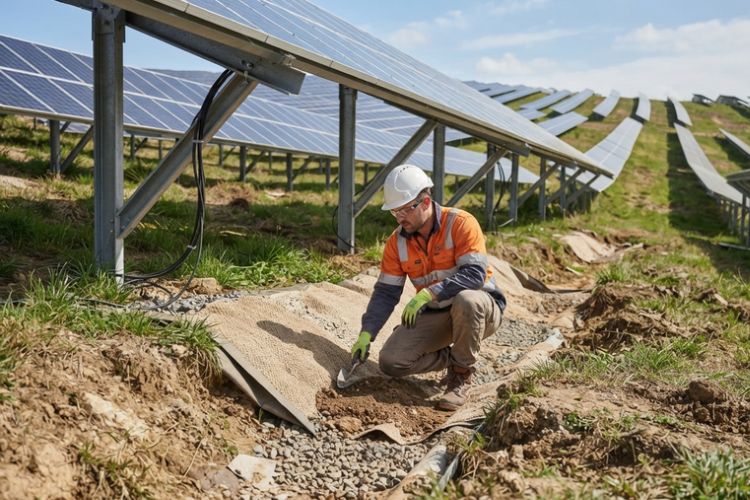
Roads, slopes, bare ground, and areas that have washed out before should be checked during regular maintenance. Small channels, loose soil, or sediment buildup are much easier to handle before they turn into bigger repairs.
Solar farm drainage systems also need regular checks for sediment, blockages, and washouts. Keeping up with Solar erosion control can help water move where it should and keep nearby areas from being damaged.
Know When a Quick Fix Is Not Enough
If a road washes out after every heavy rain or a gully keeps getting deeper, another quick repair may only last until the next storm. The same goes for basins that keep filling with sediment. In these cases, the drainage, grading, or ground cover may need to be fixed so the problem does not keep coming back.
Conclusion
Erosion is much easier to deal with when it is caught before serious damage occurs. Keeping an eye on slopes, roads, vegetation, and drainage areas can help prevent small washouts from turning into repairs that take more time, labor, and materials.
J.E. Shurden Construction works with utility-scale solar sites on erosion control, grading, drainage, and site maintenance needs. With regular Solar erosion control, solar farm owners can spend less time dealing with repeat damage and keep their sites in better shape throughout the year.
FAQs
Why does soil wash away beneath solar panels?
Rain can run off the edges of solar panels and hit the same areas of ground again and again. If the soil is bare or the land slopes, that water can start carrying soil away and leave small washed-out areas behind.
How often should erosion controls on a solar farm be inspected?
There is no single schedule that works for every solar farm. Regular checks are important, but it is also a good idea to inspect the site after heavy rain when washouts, sediment buildup, and damaged controls are easier to spot.
Can vegetation help control erosion on a solar farm?
Yes. Grass and other suitable vegetation help cover exposed soil and keep it from washing away. Their roots also hold the soil together, while the plants help slow water as it moves across the ground.
What causes access roads to wash out after heavy rain?
Water can run across a road or follow its edges during heavy rain, taking loose gravel and soil with it. If this keeps happening in the same place, ruts can get deeper, and sections of the road may need new gravel or grading.