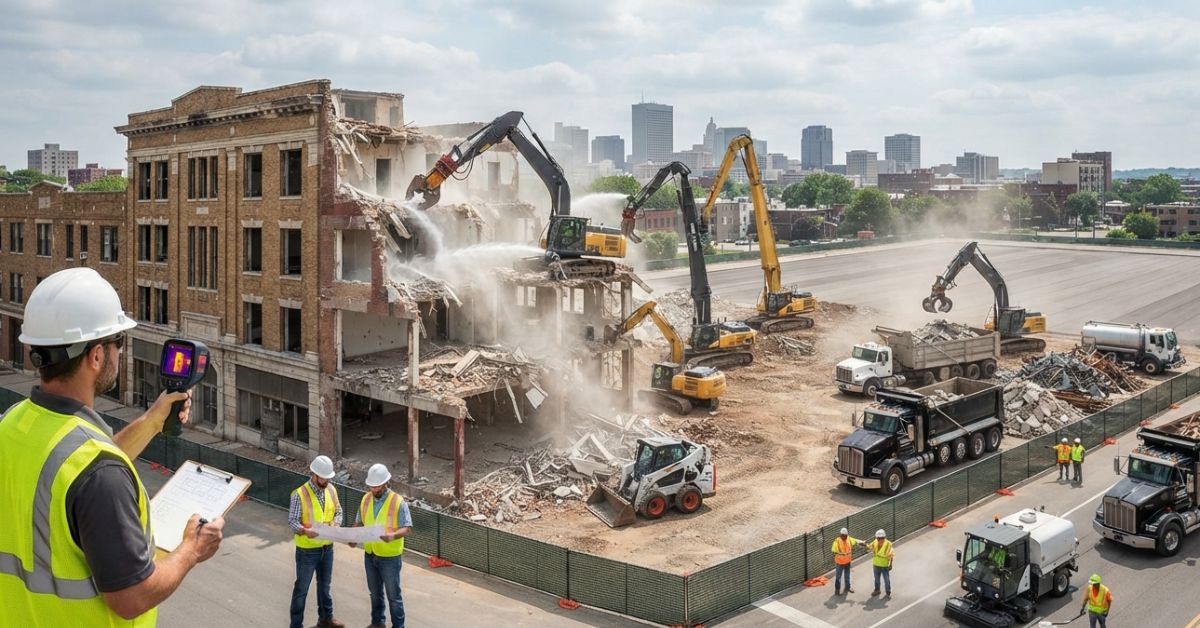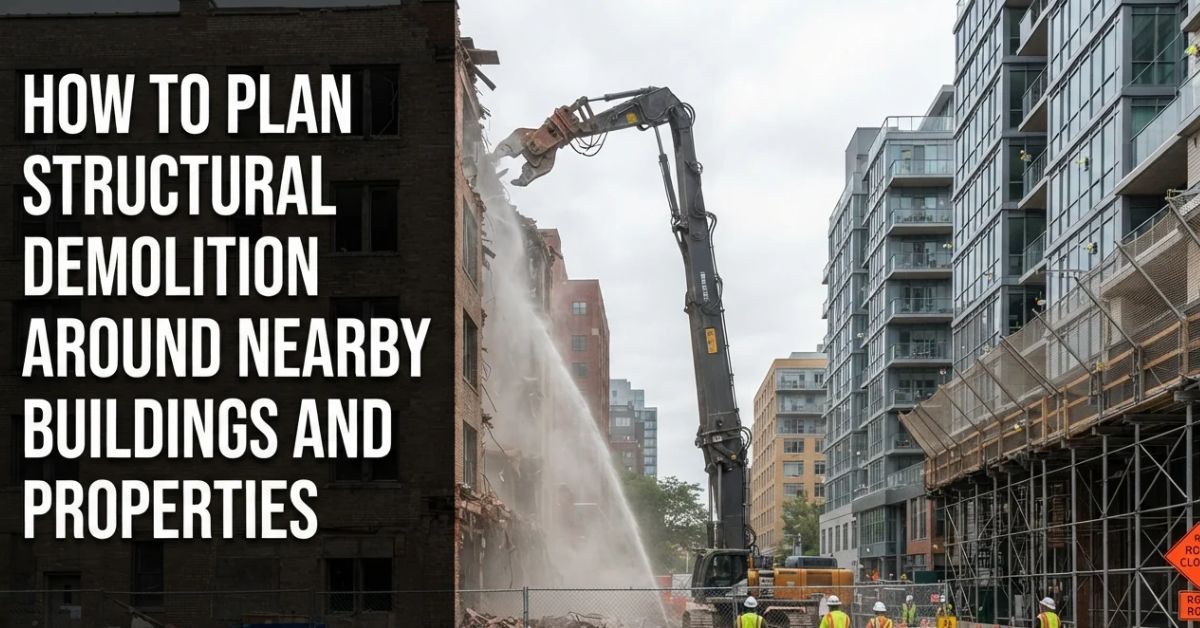
Taking down a structure is more complicated when homes, businesses, roads, or other properties sit close to the work area. Crews have less room for equipment, falling material, trucks, and debris, while everything outside the work zone needs to remain protected.
Good Structural Demolition planning starts well before machines arrive. The contractor needs to understand the building, surrounding conditions, utilities, access points, and possible effects on Nearby Buildings so the work can move forward in a controlled way.
Start With What Is Standing Around the Demolition Site
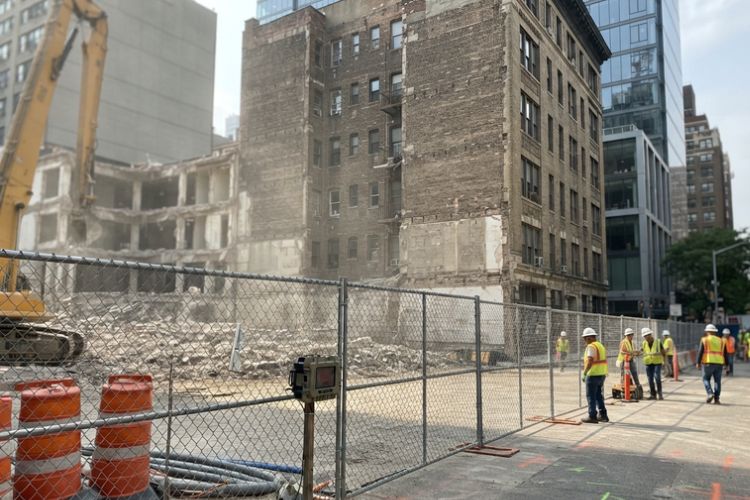
Before any demolition work begins, it is important to look at what surrounds the building. Nearby structures, fences, sidewalks, roads, retaining walls, landscaping, and utility lines can all affect how much room crews have to work.
A building in an open area gives equipment plenty of space to move around. Building Demolition in a developed area is different because crews may be working only a short distance from neighboring properties, roads, or active businesses.
J. E. Shurden Construction considers these surrounding conditions when planning demolition work. Looking at access, available space, and nearby property early on helps crews decide how equipment and debris can move through the site as the job progresses.
Document Nearby Properties Before Equipment Moves In
Before equipment arrives, it helps to record the condition of the properties around the demolition site. Crews can look for existing cracks, damaged masonry, uneven pavement, leaning fences, and other signs of wear that are already present.
Photos and written notes provide a clear picture of how surrounding areas looked before work started. This can be especially important when Structural Demolition is happening close to homes, businesses, sidewalks, or other structures.
If questions about cracks, movement, or property damage come up later, the original records can be reviewed. They give contractors and property owners a useful point of reference for comparing conditions before, during, and after the demolition work.
Understand How the Structure Supports Itself
Before any major part of a building comes down, crews need to understand what is holding it up. Walls, columns, beams, floors, and roof sections often work together, so removing one part can change how the rest of the structure behaves.
Foundations and structural connections also need to be checked before work moves forward. Knowing where the building carries its weight helps crews decide which areas can be removed first and which sections may need extra support during the work.
Older buildings can be less predictable because they may have been changed or repaired over the years. Structural demolition experts can identify these conditions and plan how each section should be handled before walls, floors, or other major components are removed.
Build the Demolition Sequence Around What Needs to Stay
A building cannot simply come down in whatever order is most convenient. Structural Demolition should follow a sequence that keeps the remaining portions stable while giving workers and equipment enough room to continue safely.
The plan may call for certain roof sections, walls, interior materials, or structural members to be removed before others. When another property is close by, selective removal may also be used where large-scale mechanical demolition would create unnecessary concerns.
Give Falling Material Somewhere Safe to Go
Debris needs a controlled destination rather than simply falling wherever space appears available. Contractors can establish drop zones, equipment boundaries, barriers, and debris staging areas based on the building layout and surrounding property.
Good Demolition Safety also means considering the reach of excavators and the direction material may move as sections are separated. Keeping debris inside the planned work zone helps protect workers, pedestrians, vehicles, and neighboring property.
Utilities Need Attention Before the First Structural Cut
Before demolition starts, crews need to find out which utility lines are connected to the property. Gas, electricity, water, sewer, and communication lines may run through the site, and some can be buried or difficult to spot.
Some of these lines may also serve homes or businesses nearby. Crews need to know which services can be shut off and which ones must remain in use so the demolition does not cause problems for surrounding properties.
Demolition Permits and utility shutoffs should be sorted out before heavy equipment arrives. Knowing where buried lines are located also makes it easier to work around them when removing concrete, digging out foundations, or moving equipment across the site.
Manage the Area Around the Demolition Site
Demolition affects more than the structure coming down. Crews also need to think about what may travel beyond the work area and how equipment, trucks, and people will move through the site.
Keep Dust, Noise, and Vibration Under Control
Breaking concrete and removing heavy materials can create dust, noise, and vibration that reach beyond the property line. These effects matter even more when homes, businesses, roads, or Nearby Buildings are only a short distance away.
During Structural Demolition, crews can use dust-control measures and choose work methods that suit the space around them. Vibration may also need closer attention when older buildings or other sensitive structures are located near the work.
Leave Enough Room for Equipment and Trucks
Excavators, loaders, and trucks need enough room to enter, work, turn, and leave the property. On a tight site, crews may use planned travel paths and spotters to keep equipment away from buildings, fences, and other areas that need to stay untouched.
A Professional Demolition plan should also account for where trucks will load and how they will leave the site. Clear routes can keep debris moving without unnecessarily blocking driveways, sidewalks, entrances, or nearby roads.
Do Not Ignore What Happens Below Ground
The visible structure is only part of the job. Foundations, footings, basements, buried utilities, drainage systems, and changes in soil support can continue to affect the site after the upper portions of the building have been removed.
This is particularly important during Building Demolition where foundations sit close together. Removing below-ground material without considering nearby soil and structural conditions can create problems that were not present during the above-ground portion of the work.
Keep the Site Secure as the Building Comes Down
A demolition site can look very different after just a few hours of work. Once walls, floors, or supporting sections are removed, crews need to check the remaining structure and make sure the next area is ready for work.
Good Demolition Safety also means keeping people away from active work zones. Barriers should remain in place, access should be limited, and loose debris should not be left where it can block equipment or create problems for workers moving around the site.
Crews should keep an eye on the site as the job moves forward instead of relying only on the original plan. If they notice shifting materials, unstable sections, or something they did not expect, the issue can be handled before demolition continues.
Plan the Cleanup Before Demolition Starts
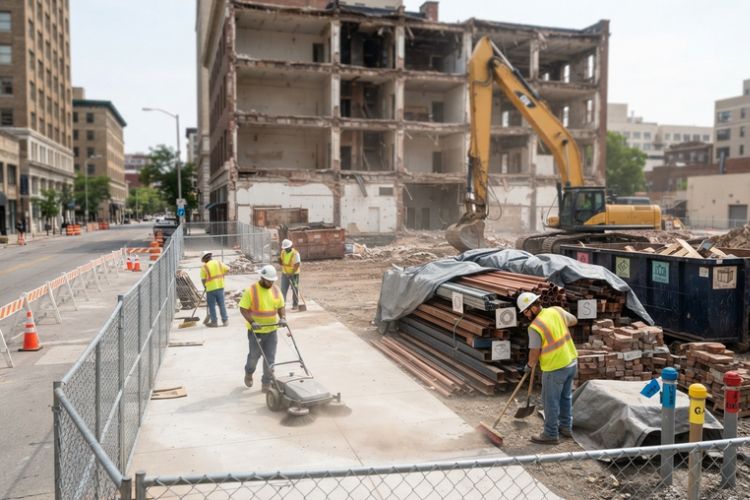
Cleanup is easier when there is already a plan for where all the material will go. Crews need enough room to sort, stack, load, and remove debris without creating piles that get in the way of equipment or spill into nearby areas.
Debris can also build up quickly as walls, concrete, and other parts of the building come down. Removing material throughout the job keeps the work area easier to move around and gives crews more space for equipment and trucks.
Cleanup should remain part of Structural Demolition until the site is cleared. Once debris, unwanted foundations, and leftover materials are removed, the property can be prepared for grading, utility work, new construction, or its next planned use.
Conclusion
Demolition near other properties takes more than bringing in equipment and starting the work. Crews need to understand the building, check the surrounding area, locate utilities, plan how debris will be handled, and take care of required Demolition Permits before work gets underway.
A well-planned demolition also makes it easier to protect nearby properties while keeping the site organized from start to finish. Once the structure and debris are cleared, the property can be left ready for grading, new construction, or whatever comes next.
FAQs
Should nearby properties be checked before demolition?
Yes. It is a good idea to look over nearby properties before the work starts and note any cracks, damaged walls, uneven pavement, or other existing issues. Photos can also provide a clear record of what was already there before demolition began.
Can demolition vibration affect nearby buildings?
Yes, vibration from heavy equipment, concrete breaking, and falling materials can sometimes be felt beyond the work site. How much it affects Nearby Buildings can depend on their distance from the work, their condition, and the type of demolition being done.
Why does the order of demolition matter?
Taking a building down in the right order helps keep the remaining sections stable as the work moves forward. It also gives crews a better way to handle equipment, falling materials, and debris without trying to remove too much at once.
What utilities should be checked before demolition?
Electricity, natural gas, water, sewer, telecommunications, and underground services should all be identified. Contractors need to determine which services can be disconnected and whether any lines continue to serve surrounding properties.