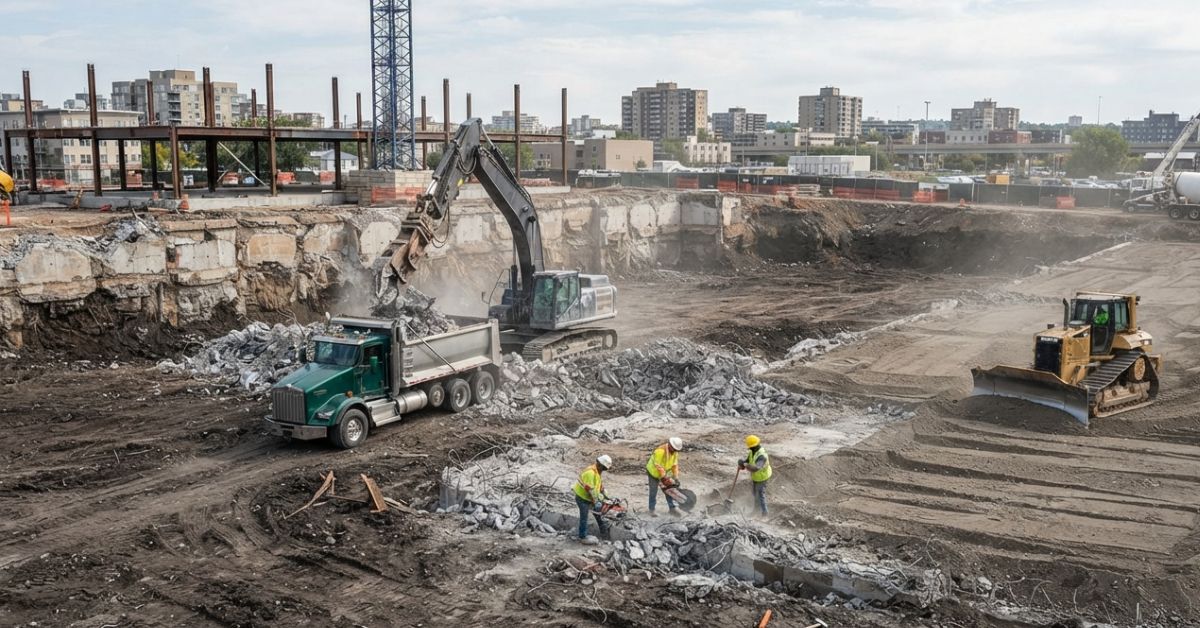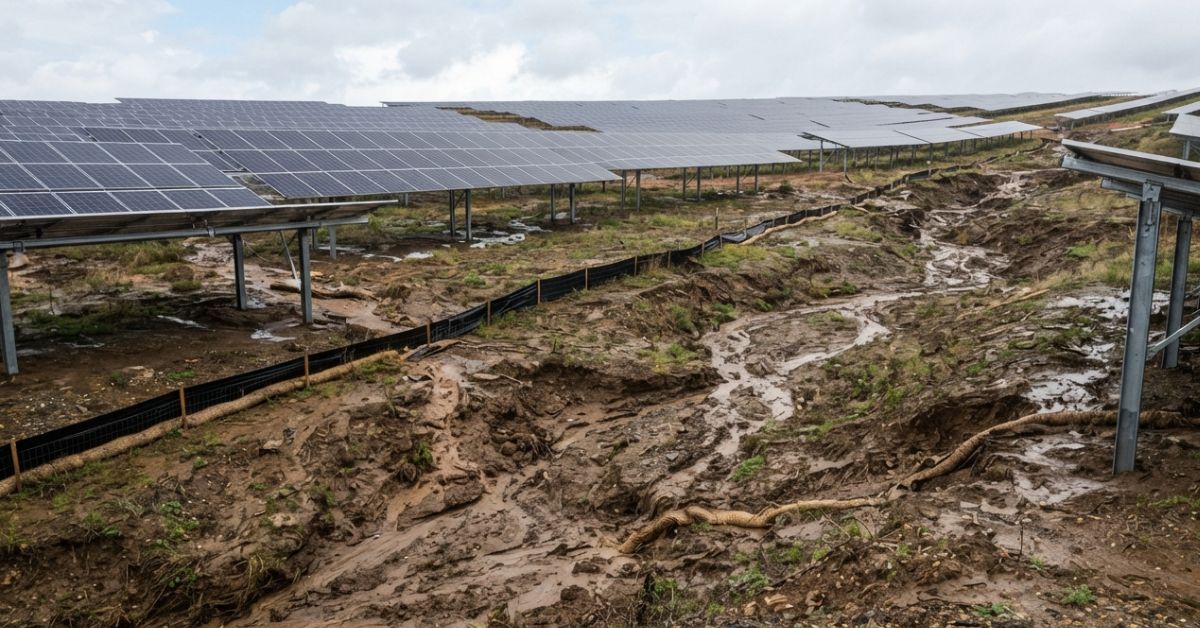
Utility-scale solar farms can cover hundreds of acres, so managing water and soil becomes an important part of the project from the beginning. Construction may involve clearing vegetation, grading, trenching, driving equipment across the property, and building access roads. Each activity can change how water moves across the site.
The panels can also change how rainwater reaches the ground. Rain that falls on a panel may run toward its lower edge and land in a smaller area below. If the soil is bare or vegetation is not well established, this concentrated flow can gradually wash away soil.
That is why solar farm erosion control needs to consider more than the construction period. The site should also be managed for the drainage patterns that may develop once the panels are installed and operating.
Why Solar Farms Have Different Erosion Risks
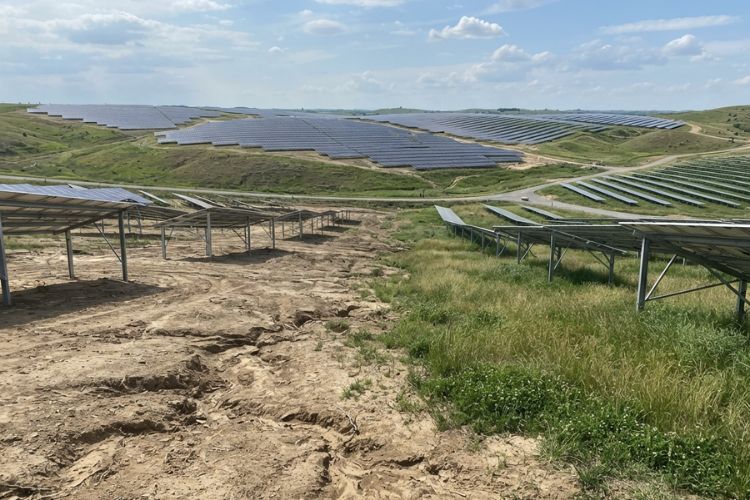
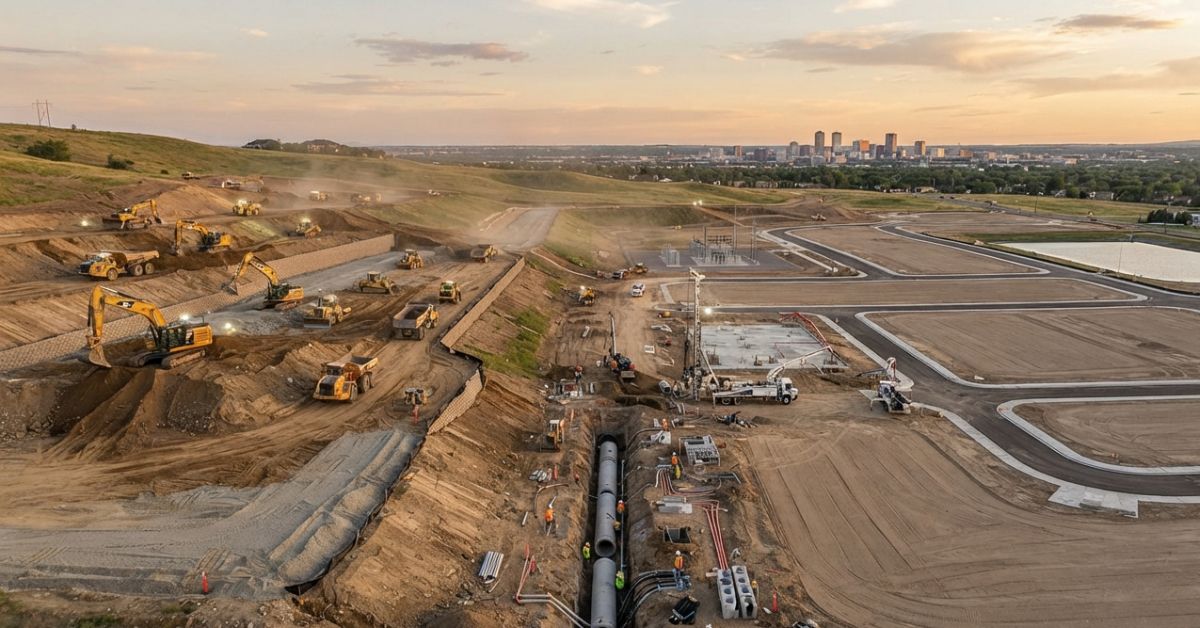
Solar farm construction can disturb a large amount of land. Clearing, grading, trenching, pile installation, and heavy equipment can all affect the soil. On a utility-scale project, these activities may cover hundreds of acres, leaving large areas more exposed to rain and runoff.
The challenges can continue after construction is complete. Areas between panel rows may have limited vegetation, while access roads and equipment pads can become compacted and change the way water moves across the property. That is why solar farm site management should consider both the construction phase and the long-term condition of the site.
The Dripline Is One of the Main Trouble Spots
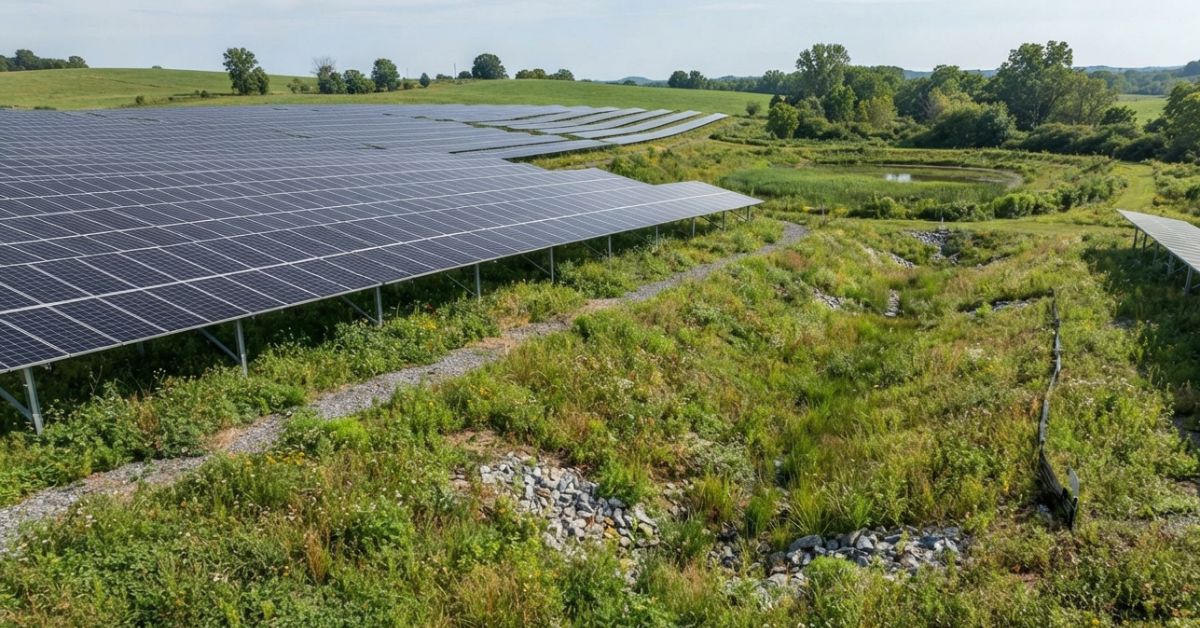
One of the most important issues unique to solar arrays is the panel dripline. Water runs across the panel surface and falls from the lower edge, concentrating rainfall in a narrower area than it would naturally reach on an open field.
Research has found greater moisture and periods of saturation near panel driplines, while the spaces between rows can help distribute and infiltrate runoff.
What does that mean on the ground? If the dripline falls onto bare soil, repeated rainfall may form small channels or scour the surface. Maintaining vegetation beneath and around the panels can help reduce this risk.
Soil Condition Starts During Construction
A major part of solar farm soil erosion can begin before the first panel is installed. Grading, excavation, trenching, and equipment movement can disturb the soil structure.
Compacted soil absorbs water differently from undisturbed ground. Removing vegetation and topsoil can also reduce the soil’s ability to resist erosion.
Construction planning should therefore focus on minimizing unnecessary disturbance and protecting areas that do not need to be cleared. The USDA recommends considering soil health, erosion, stormwater, and vegetation management throughout utility-scale solar development.
Vegetation Can Do Much of the Heavy Lifting
Ground cover is one of the most useful tools available on a solar site. Healthy vegetation slows rainfall, protects the surface, supports infiltration, and helps hold soil in place through its roots.
Recent field research found almost complete ground coverage at the solar farms studied and identified healthy vegetation as important for infiltration and reducing erosion.
This makes vegetation more than a landscaping decision. It is part of the site’s stormwater strategy. Where suitable, perennial vegetation can provide longer-term coverage with less repeated disturbance. The exact choice should reflect local climate, soil, maintenance needs, and the conditions beneath the array.
Slopes Can Make Runoff Harder to Control
Slope adds another challenge. Water moving down a long or steep area can gain enough speed to carry soil with it. Roads, panel rows, and equipment pads can also interrupt natural drainage and create concentrated flow paths.
A site with steep terrain may need additional measures such as swales, check dams, infiltration areas, or other drainage controls. These features should be planned around the property’s natural drainage rather than simply installed after erosion appears.
Research also indicates that site conditions such as slope, soil type, vegetation, and rainfall can substantially change how solar farms respond to stormwater. On more challenging terrain, erosion control for solar farms may require a combination of drainage and surface protection measures rather than relying on one method.
Roads and Equipment Areas Change the Drainage Pattern
Access roads, inverter pads, substations, laydown areas, and construction entrances deserve attention because they can become pathways for runoff.
Compacted or gravel surfaces may behave differently from surrounding vegetated soil. If water collects beside a road or flows toward a vulnerable slope, it can carry sediment into lower areas.
These areas should be included in the site’s main drainage plan instead of being handled on their own. Keeping runoff under control around them can help prevent erosion and reduce maintenance problems near electrical equipment, access roads, and other important parts of the solar farm.
Bare Ground Between Panels Can Become a Problem
The space between panel rows can play an important role in how water moves across the site. When the ground has healthy vegetation, it can slow runoff and allow more water to soak into the soil. Bare ground, on the other hand, can leave soil exposed to rainfall and make erosion more likely.
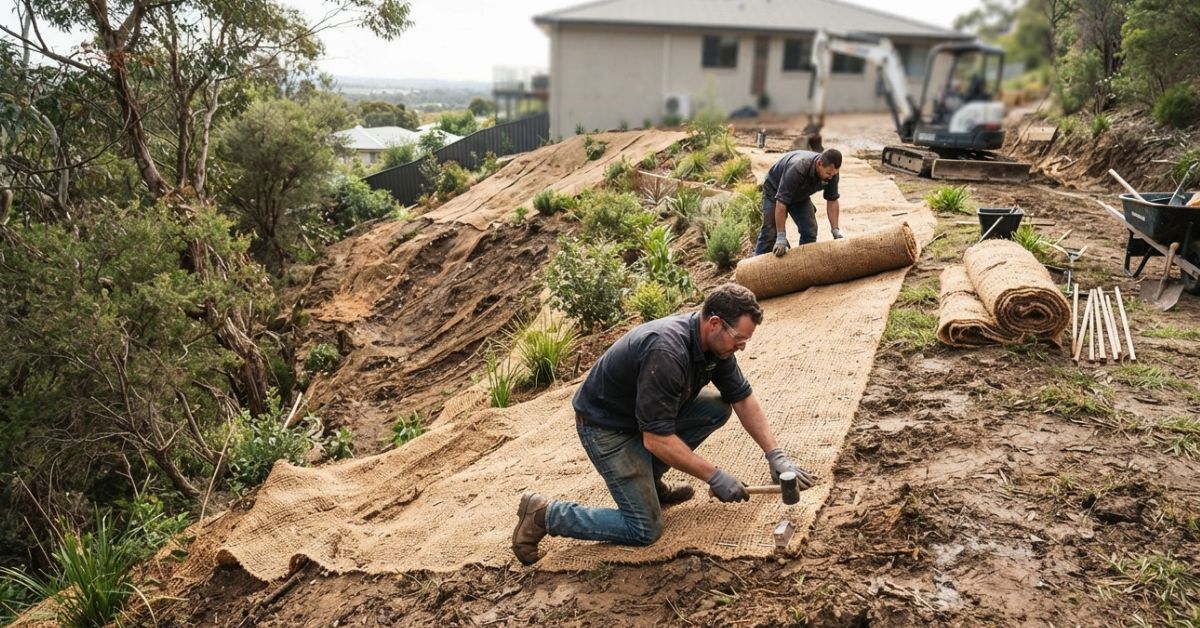
While vegetation is getting established, contractors may need temporary protection. Depending on the site, this could include mulch, erosion-control blankets, seeding, or other surface treatments suited to the conditions.
The best choice will depend on factors such as soil type, slope, rainfall, and how long the area is expected to stay exposed. A method that works well on level ground may not be enough where water moves quickly down a steeper slope.
Keeping Sediment From Leaving the Property
Not every erosion problem can be prevented at its source. During construction, some soil may still become displaced, particularly during heavy rainfall.
Sediment controls such as silt fences, fiber rolls, sediment traps, basins, and inlet protection can help keep that material from reaching roads, waterways, wetlands, or neighboring properties.
These measures help with erosion prevention, but they work differently from vegetation and surface protection. Vegetation and surface treatments help keep soil in place, while sediment controls catch and contain soil after runoff has already carried it away.
Construction Phasing Can Limit Exposure
A large solar project does not have to be worked on all at once. Dividing the site into smaller sections can help keep exposed soil to a minimum and make it easier for crews to keep up with erosion controls.
For example, a crew might finish grading and stabilize one section before moving to the next. That way, fewer areas are left open to rain and runoff at the same time. It also gives completed sections a chance to settle and develop vegetation before more work begins.
This approach can make solar farm site management much simpler. Crews can focus on areas that are still under construction while checking finished sections for any erosion problems that may need attention.
Restoration Gets Harder After Panels Are Installed
One issue that can be overlooked is access. Once rows of panels, electrical equipment, and other infrastructure are in place, bringing large equipment back into certain areas can be difficult.
This means restoration should not always be treated as the final task. Planning vegetation and stabilization early can reduce the amount of work required after installation.
The International Erosion Control Association has also highlighted limited access around completed solar arrays as a reason to consider restoration earlier in the project timeline.
Protecting Infrastructure From Runoff
Runoff can cause problems beyond simply washing away soil. If water repeatedly flows around panel supports, access roads, equipment pads, or drainage features, it can gradually weaken the surrounding ground and create repair issues.
These problems may start small, but they can become harder to deal with once the solar farm is fully operational. Planning for areas where water is likely to collect or concentrate can help crews address them early and keep important infrastructure in better condition. A well-planned solar farm erosion control approach should therefore look at how runoff will move around the entire site, not just the areas with exposed soil.
Building a Practical Erosion Strategy
Every solar farm has its own conditions, so the right approach can vary from one site to another. Factors such as soil type, slope, rainfall, drainage, panel layout, vegetation, and construction activity all need to be considered before deciding what measures to use.
Some sites may have good vegetation and natural drainage that help manage runoff. Others may need extra features, such as infiltration trenches or basins, where water tends to collect or move quickly. These measures can also help manage runoff around panel driplines during heavy rainfall.
The goal is straightforward. Slow the water down, give it room to spread and soak into the ground, and prevent concentrated runoff from washing away exposed soil. Working with Erosion experts can also help identify site-specific risks and determine which measures are practical for the project’s conditions.
Inspection Should Continue After Construction
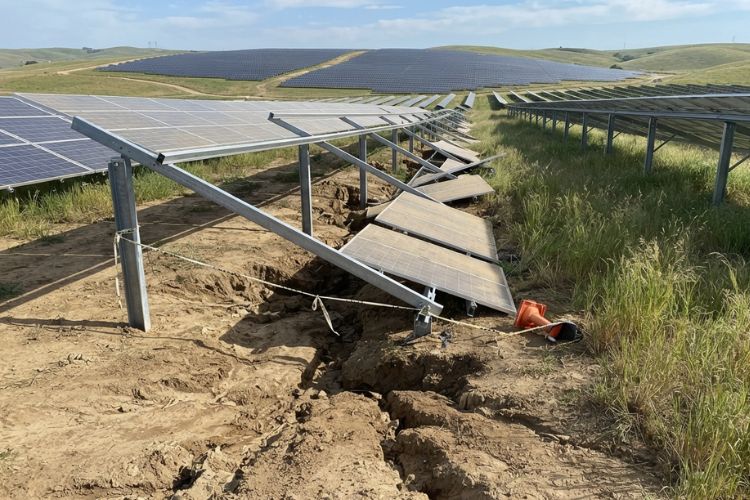
Erosion control does not end when the panels begin producing electricity. Heavy storms, maintenance traffic, failed vegetation, and damaged drainage features can create new problems.
Regular inspections should look for rills, gullies, sediment buildup, bare areas, damaged controls, and erosion near panel driplines or roads.
Early repairs are usually easier than dealing with a larger failure later. Continued erosion prevention should therefore be part of the property’s long-term maintenance plan.
Conclsuion
Utility-scale solar farms can face serious erosion challenges because construction disturbs large areas and the panels can change how rainfall reaches the ground. A practical solar farm erosion control plan can help manage runoff, protect vegetation, stabilize exposed soil, and address drainage concerns before they turn into larger problems.
For projects involving extensive grading or challenging terrain, J.E. Shurden Construction offers construction support focused on careful site preparation and land development.
FAQs
Do solar panels increase erosion?
Not automatically. Panels redistribute rainfall, especially near their lower edges, but the actual erosion risk depends on soil, slope, rainfall, vegetation, and site design.
Why is vegetation important on a solar farm?
Vegetation protects the soil surface, slows runoff, improves infiltration, and helps hold soil in place.
What is the dripline effect?
It refers to water falling from the lower edge of a solar panel. Because rainfall is concentrated in this area, bare or poorly protected soil may be more vulnerable to scour.
How can erosion be controlled during solar construction?
Limiting disturbance, protecting soil, maintaining vegetation, managing runoff, using sediment controls, and phasing construction can all reduce erosion risks.
Does every solar farm need engineered drainage?
No. Some sites can manage runoff effectively through vegetation and natural infiltration. Steeper sites, poorly draining soils, or areas with concentrated runoff may require additional engineered controls.