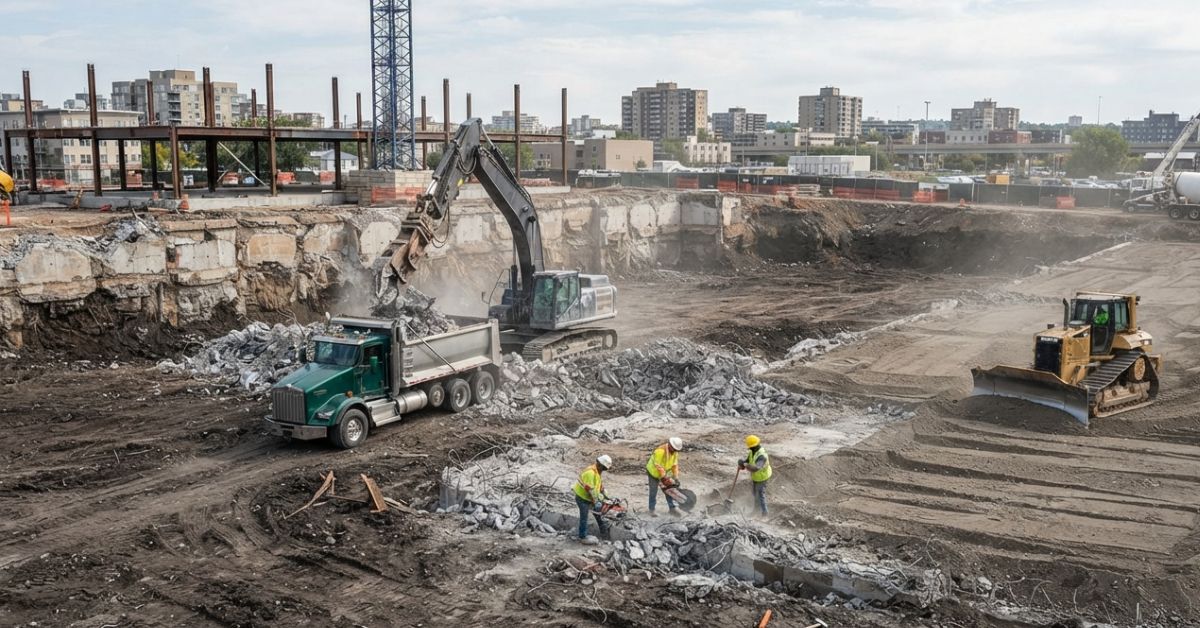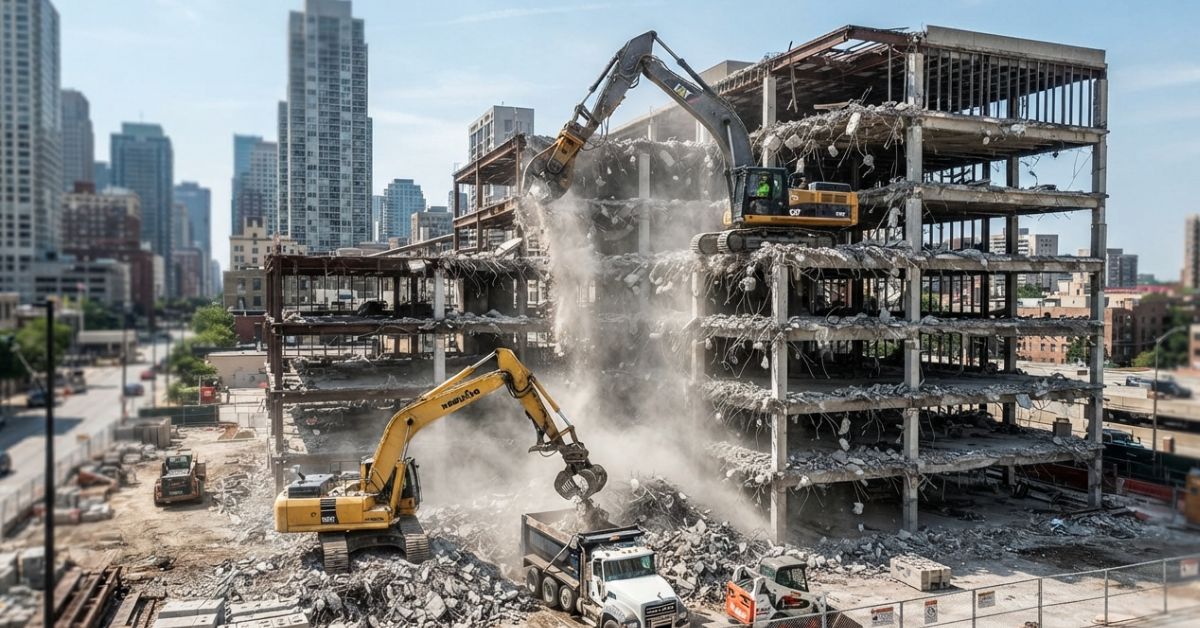
Commercial demolition is very different from simply tearing down an old structure. Large buildings often contain reinforced concrete, structural steel, masonry, electrical systems, and other materials that require careful planning and specialized machinery. The right equipment allows crews to remove these materials in a controlled sequence while keeping the work area organized and manageable.
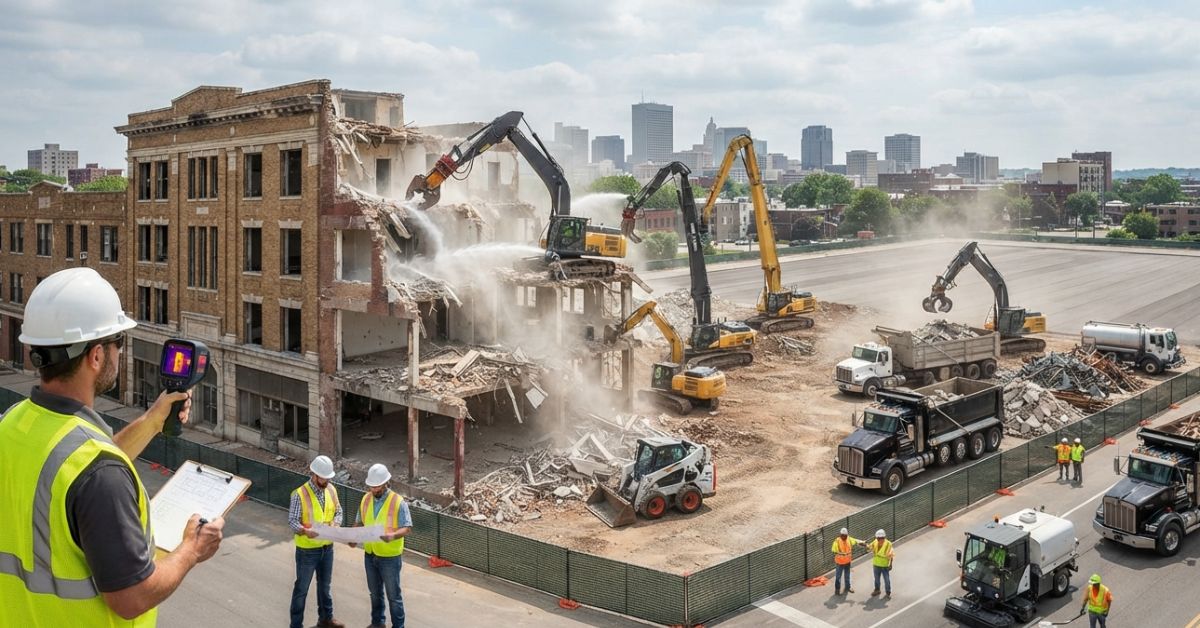
Modern commercial demolition relies heavily on excavators, breakers, shears, pulverizers, grapples, loaders, and other machines. Each has a specific purpose, and contractors select equipment according to the building, site conditions, materials, and planned demolition method.
Why Heavy Equipment Matters in Commercial Demolition?
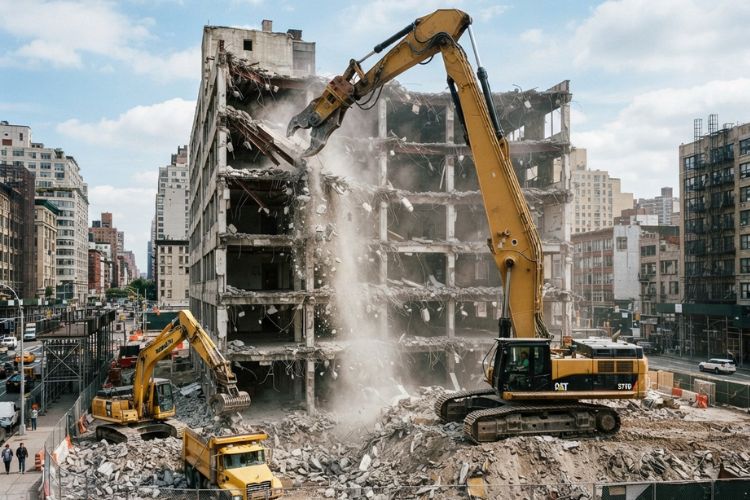
Large structures can contain thousands of tons of material, making manual removal impractical for many projects. Heavy machinery gives crews the reach, strength, and capacity needed to handle structural components and large quantities of debris.
Equipment also allows for a more organized workflow. Instead of having workers do every job on the ground, machinery can break concrete, cut steel, move debris, and prepare materials for removal. Equipment selection for a project depends on the building height, construction materials, space available,e and site access.
For commercial demolition, the goal is not simply to remove a structure as quickly as possible. The work must be planned around safety, efficiency, material handling, and the conditions surrounding the property.
Excavators Do More Than Dig
Excavators are among the most versatile machines found on demolition sites. Although they are commonly associated with excavation, their hydraulic systems allow them to operate a variety of attachments designed for demolition work.
Depending on the attachments used, the excavator will help to crush concrete, tear down building components, recycle debris, or even move bulk materials. It therefore becomes versatile enough to be used at different phases of construction projects.
The size of the machine should also be considered, since some may be small enough to be used in smaller sites, while others are more powerful due to their size. The correct choice of the carrier machine is important in preventing the use of machines that are either too small or too big for the job.
High-Reach Excavators for Tall Buildings
Tall buildings pose different kinds of problems because workers have to work at very high levels. High-reachh excavators are specifically made with long boom arms that help operators reach the upper parts of a building while standing on the ground.
This type of machinery can be particularly useful during building demolition involving multi-story commercial properties. Instead of placing workers directly alongside unstable structural sections, the machine can perform much of the removal from a greater distance. An experienced Demolition company can determine whether this type of equipment is suitable based on the building and site conditions.
The equipment still has operating limits. Contractors need to consider the machine’s reach, stability, working radius, and the characteristics of the structure before deciding whether a high-reach excavator is appropriate.
Choosing the Right Demolition Equipment
Different attachments are not always the same because of the type of task. Choosing suitable demolition equipment is one way of ensuring efficient work with varied materials.
Hydraulic Breakers
A hydraulic breaker is specifically made to break tough materials such as concrete and masonry. It is helpful if workers want to break up things like foundations, slabs, or walls.
The breaker must be matched with a suitable excavator and material. Using equipment that is too small can reduce productivity, while an oversized attachment may be unnecessary for lighter work.
Concrete Pulverizers
Pulverizers are useful when reinforced concrete needs to be crushed into smaller pieces. They can also help separate concrete from reinforcing steel, making the resulting material easier to handle.
This makes pulverizers particularly useful during later stages of demolition, when large structural sections have already been removed, and materials need to be processed.
Hydraulic Shears
Hydraulic shears are designed for cutting metal components. They can handle structural steel, pipes, beams, and other metal materials that cannot be efficiently processed with concrete-focused attachments.
Using a shear allows crews to reduce large steel components into manageable pieces for handling, transportation, or recycling.
Grapples
Grapples help operators pick up, sort, and move irregular pieces of debris. They can be useful when materials have already been broken apart but still need to be separated or relocated.
Because demolition sites can quickly become crowded with different types of waste, grapples can help maintain a more organized work area.
How Equipment Changes During a Demolition Project
A commercial project rarely relies on one machine from beginning to end. The equipment requirements can change as the structure progresses through different stages.
At the start of a project, crews may use machinery to clear materials and get the work area ready. As the structure begins coming down, excavators fitted with breakers, shears, or other attachments can handle the more demanding removal tasks.
Once the main sections have been taken down, the work usually shifts toward sorting and moving debris. Loaders, buckets, and grapples can then take on a larger role. Using different machines at each stage helps commercial contractors keep the job moving without relying on every piece of equipment at the same time.
Safety and Heavy Equipment
Using heavy machinery around a partially demolished building takes more than simply bringing the right equipment to the site. Operators need enough room to maneuver, and areas with active machinery or unstable materials should be kept clear of other workers.
Before work begins, equipment should be checked to make sure everything is working properly. Attachments need to be fitted securely and matched to the job. Operators also need to be familiar with the machine’s reach, visibility, stability, and operating limits.
Heavy equipment can help crews work from a safer distance, but it does not remove every hazard. Good communication, careful planning, and trained operators are still important throughout demolition work.
Improving Efficiency on Commercial Jobsites
The right machinery can reduce unnecessary handling and keep different stages of a project moving. For example, using a concrete pulverizer after structural concrete has been removed can make material processing easier, while a grapple can help move separated debris.
Equipment selection also affects downtime. If a contractor has to repeatedly wait for another machine to complete a basic task, the schedule can quickly become less efficient. Experienced commercial contractors consider the entire demolition sequence when planning their equipment needs.
The objective is not simply to use the biggest machine available. It is to select equipment that provides enough capacity for the work without creating unnecessary access, transportation, or operating challenges.
Handling and Sorting Demolition Materials
Once materials are removed from a building, they still need to be handled appropriately. Concrete, steel, wood, and mixed debris may require different approaches.
Excavators and grapples can move materials around the site, while loaders can collect and transport debris. Separating materials can also make recycling and disposal more efficient.
Good material management is especially important on large commercial demolition projects because poorly organized debris can interfere with access and slow down other activities.
What Determines the Right Equipment?
Several factors influence equipment selection before work starts. Contractors can assess:
- Building heights and structural design
- Concrete, masonry, steel, and other materials
- Room around the building
- Ground conditions and site access
- Required machine access
- Compatibility with attachments
- Amount of material removed
- Project timeline
- Local buildings and infrastructure
These details help determine which machines and attachments are appropriate. A contractor working on a low-rise concrete structure may have very different requirements from one handling a tall steel-framed building.
Choosing a Contractor for Commercial Demolition
Equipment is only one part of a successful project. The contractor operating that machinery also needs experience with the type of structure being removed.
When comparing commercial demolition contractors Mississippi, look at their equipment capabilities, previous projects, safety procedures, and approach to debris management. Experience with similar buildings can help a contractor anticipate practical challenges before work begins.
The right contractor should also be able to explain which machines are suitable for the project and why. Their experience with similar structures can make it easier to plan the work, manage equipment, and handle debris throughout the demolition process.
The Future of Demolition Equipment
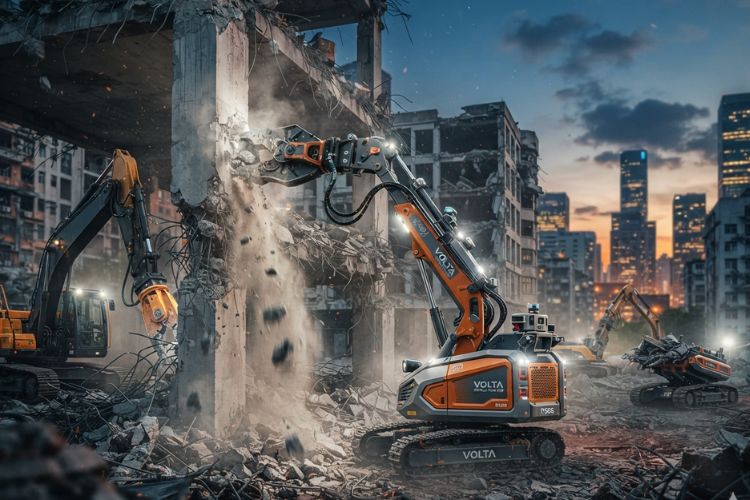
Heavy machinery continues to evolve as manufacturers introduce improved operator controls, cameras, sensors, monitoring systems, and other technologies. These developments can give operators better visibility and information while working around complex structures.
Future demolition equipment may continue to focus on precision, efficiency, and safer operation. Technology can support the operator, but proper planning and skilled decision-making will remain central to successful demolition.
Final Thoughts
Heavy equipment has changed the way large demolition projects are handled. Excavators can take on different jobs, high-reach machines make it possible to work on taller structures, and specialized attachments help crews deal with concrete, steel, and other materials more efficiently.
There is no one piece of equipment that is suitable for all projects. The best method is determined by the building, site conditions, materials, and demolition plan. Proper machinery, careful preparation, and experienced operators allow for large-scale building demolition to be performed in a more organized and controlled manner.
Planning a commercial demolition project? J.E. Shurden Construction offers demolition along with related civil construction services, helping keep different parts of the project under one experienced team.
FAQs
What equipment is commonly used for commercial demolition?
It really depends on the building and what needs to be removed. Excavators, high-reach excavators, hydraulic breakers, concrete pulverizers, shears, grapples, and loaders are some of the equipment crews may use.
Why are excavators so useful in demolition?
Excavators can do much more than remove soil. With different attachments, they can break concrete, cut through steel and other materials, pick up debris, and help with several stages of the project.
How do contractors decide which equipment to use?
There is no single machine that works for every demolition job. Contractors consider the building’s size, height, materials, site access, available space, and the type of work involved before choosing their equipment.
Can heavy equipment make demolition safer?
It can help reduce some manual tasks and keep workers further away from unstable parts of a structure. But even then, machinery alone does not make a site safe. You still need to have good planning, trained operators, regular inspections, and clearly marked work zones.