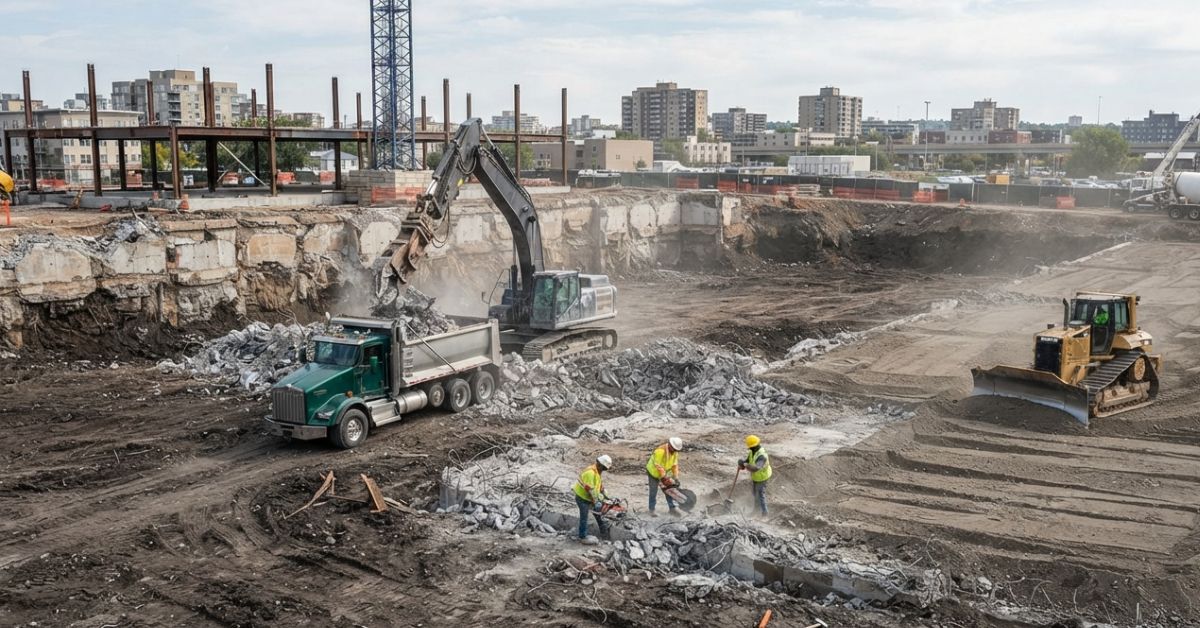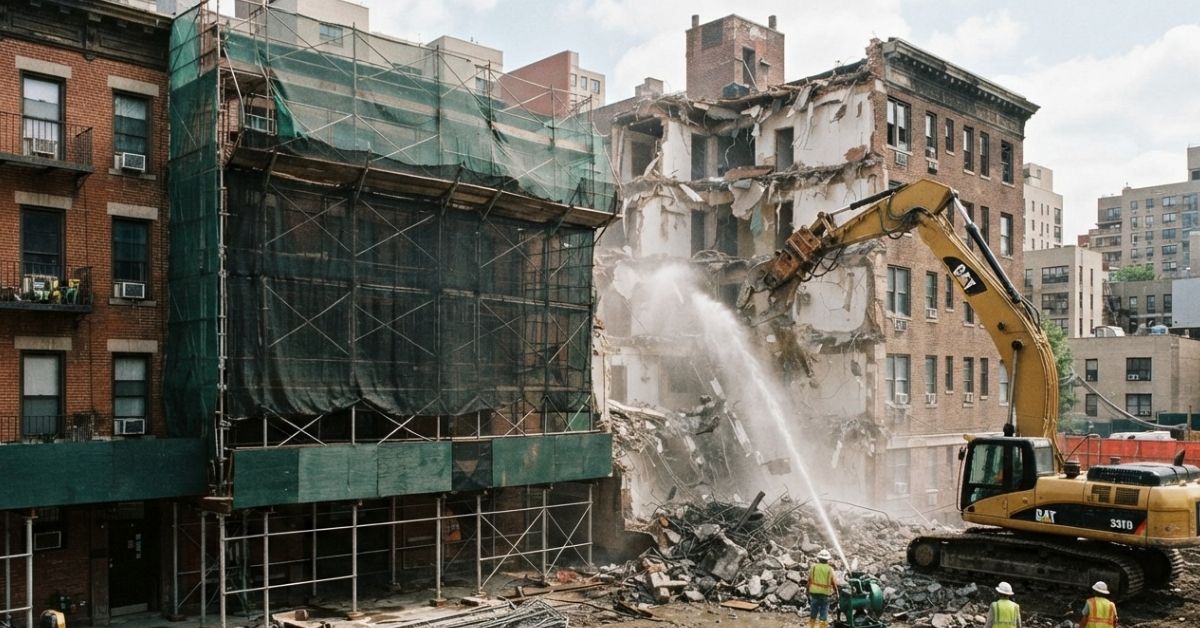
A building may be coming down, but everything around it still needs to stay where it is. That can be difficult when a demolition site shares a property line with another building or sits close to a busy road, utility lines, or an occupied space. Even a small mistake can affect something that was never meant to be part of the demolition.
That is why the work starts well before the first section is removed. Contractors look at the surrounding area, identify possible trouble spots, and decide how the structure can be taken apart with the least impact on what is nearby. The equipment, removal sequence, debris control, and site layout all play a part in keeping the project under control.
Why Nearby Structures Need Protection?
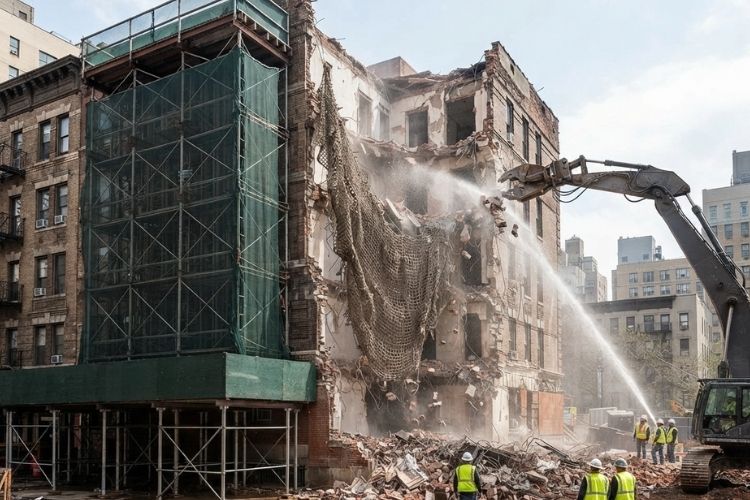
A demolition site can affect structures that are not being removed. Heavy machinery may create vibration, debris can travel beyond the work area, and removing one part of a building can change the loads carried by another.
Older buildings may have existing cracks, settlement, or weak areas. Shared walls and foundations can add to the risk. Underground utility lines also need attention, as digging or heavy equipment may affect services used by nearby properties.
This is why demolition safety begins before the first section is removed. A contractor needs to understand the conditions around the structure and identify possible risks before choosing a method.
How Demolition Contractors Protect Nearby Structures
Protecting surrounding property involves several connected steps. Each one addresses a different risk, from the initial site inspection to monitoring conditions while work is underway.
1. Conducting a Detailed Site Assessment
Before demolition starts, contractors inspect the structure and the area around it. They look at neighboring buildings, roads, utility lines, access points, and available working space. This information helps identify potential hazards and limitations before equipment begins operating.
A condition survey can also document existing cracks, settlement, or other visible damage in nearby properties. If a structure appears particularly vulnerable, the demolition plan may need additional precautions. Having a clear understanding of the site gives the crew a better basis for deciding how the work should proceed.
2,. Planning the Demolition Sequence
A safe teardown starts with deciding how the structure will come apart. Contractors work out the order of removal so each stage can be completed without compromising the sections that are still standing. This also helps the crew manage falling materials and supports safe demolition.
The layout of the property affects the plan too. Open sites usually allow more room to maneuver, while confined locations may call for a slower, section-by-section approach. Working this way gives operators better control when another building is close to the demolition area.
3. Selecting Machinery That Fits the Site
The machine used on a demolition site can make the Demolition Work easier to manage, especially when access is limited. Contractors look at the building’s size, materials, height, access, and nearby structures before deciding what to bring in.
Large machinery may not be practical on a crowded site. Equipment that fits the available space gives operators better control and makes it easier to work around neighboring buildings. The right demolition equipment should provide enough reach and power without making the job harder to manage.
4. Keeping Demolition Debris Under Control
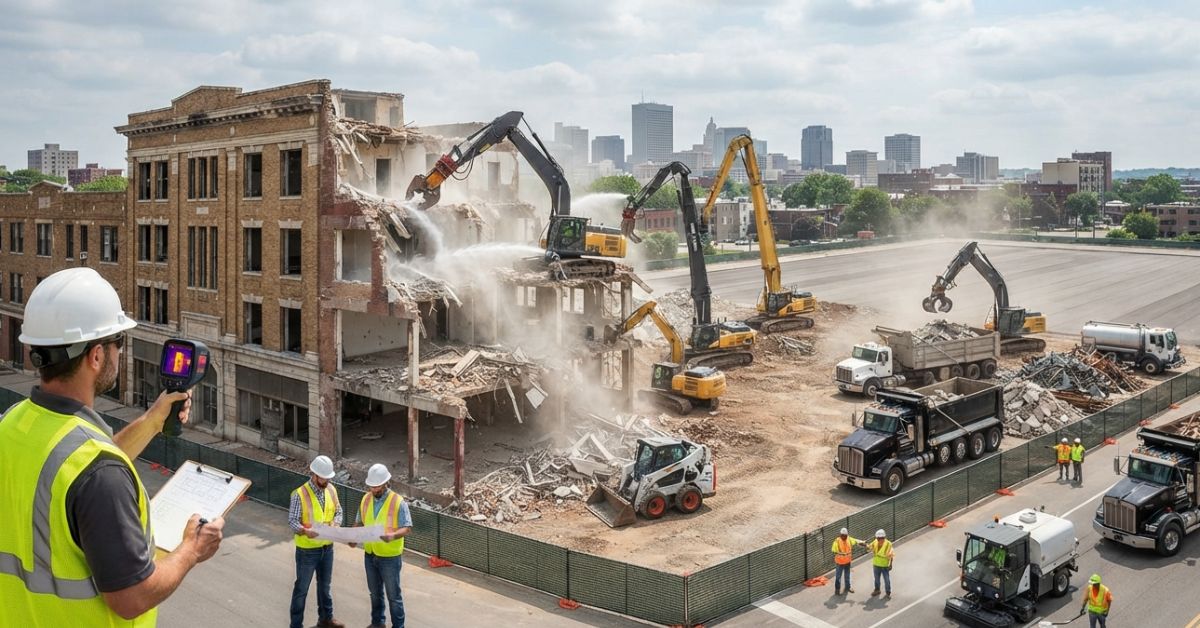
Once materials start coming loose, they need somewhere safe to go. Contractors plan where debris will fall and collect, then use fencing, barriers, or screens when needed to keep it from reaching nearby areas. This is especially important when people, vehicles, or other buildings are close to the site.
Breaking the structure down in smaller portions can also make cleanup easier to manage. Instead of allowing a large section to fall at once, the crew can remove it in stages and better control where the material ends up. This approach is useful near roads, businesses, and occupied properties.
5. Managing Dust and Airborne Particles
Breaking concrete, brick, and similar materials can send dust into the surrounding area. Wind may carry it toward nearby properties, so contractors can use water during certain tasks to keep particles under control.
Dust can also make it harder for equipment operators to see clearly. The best approach depends on the materials being removed, weather, and how close other properties are to the site.
6. Limiting Ground Vibration
Heavy machinery can send movement through the soil, which may affect buildings close to the work area. Contractors take the surrounding properties and site conditions into account when selecting the removal method. The aim is to avoid creating more disturbance than the job requires.
Where a nearby structure is more delicate, the crew may check for new cracks or other signs of movement as work continues. Any noticeable change can be reviewed before demolition carries on.
7. Checking Utility Lines Before Work Begins
Some of the most important services around a demolition site are hidden underground. Water, gas, electric, sewer, and communication lines may run through the property or connect to neighboring buildings. Finding these lines ahead of time helps contractors decide what needs to be shut off, protected, or left accessible.
Overhead power lines and cables can also affect how machinery is brought onto the property. Contractors take their position into account when planning where equipment can operate and move, helping prevent accidental contact or interruptions to nearby services.
8. Setting Up a Safe Work Area
Keeping the active area clearly separated makes demolition easier to manage. Contractors may place fencing, warning signs, barriers, and access points around the site to keep workers, equipment, and loose materials within designated areas. This also helps keep demolition work contained when nearby properties are close to the site.
If the property is next to a sidewalk or busy street, extra measures may be needed to guide pedestrians and traffic. The goal is to give the crew enough room to work without putting others too close to the activity.
9. Monitoring Adjacent Structures
Conditions around a demolition site can change as the building comes apart. For this reason, contractors may keep an eye on nearby properties throughout the project rather than relying only on the initial inspection.
This is especially helpful where buildings are older, walls are shared, or there is very little space between properties. Signs such as new cracking, shifting, or settlement may require the crew to stop and take a closer look. The work plan can then be changed if the conditions call for a different approach.
What Factors Affect the Protection Plan?
Every project has different conditions. Distance between buildings is only one consideration. A site demolition plan should reflect the actual conditions rather than rely on a standard approach.
Contractors may evaluate neighboring structures, foundations, available space, utilities, traffic, weather, materials, and the planned method.
For projects handled by experienced demolition contractors Mississippi, property owners can ask how conditions will be documented, access controlled, and changes handled. Experienced demolition contractors should also explain how the work will be adjusted if nearby conditions change.
Why Professional Demolition Planning Matters
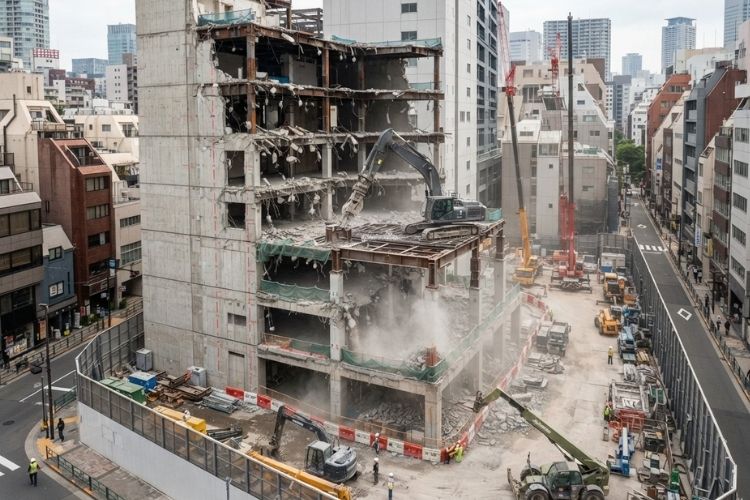
Working close to other buildings or active utilities leaves little room for mistakes. A contractor needs to assess the property, understand what is around it, and choose a removal method that fits the site. Good preparation also makes it easier to deal with unexpected conditions without putting nearby structures at unnecessary risk.
When demolition is part of a larger construction project, it can help to have related site work handled by the same contractor. J.E. Shurden Construction offers demolition along with grading, earthwork, utility work, and other civil construction services, so the next stage of the project can be planned alongside the initial removal work.
Last Words
There is more to a demolition job than clearing away an old building. The work also has to fit around everything nearby. A close wall, driveway, sidewalk, or utility line can change how the crew approaches the site and handles each stage.
Good crews pay attention to those details as the job moves along. They can change their approach when something unexpected comes up instead of forcing the original plan. That kind of care helps keep demolition manageable and reduces the chance of causing problems for the properties next door.
FAQs
What should be checked before demolition starts near another building?
The contractor should inspect the surrounding area, look for existing damage, and identify nearby structures, roads, and utility lines. This gives the crew a clearer idea of what needs extra care during the job.
How can demolition crews work safely in a tight space?
Limited space requires careful planning. Contractors can select smaller or more suitable machinery, control equipment movement, and keep people outside the active work area.
Does an older building next door need extra care?
Yes. An older property may already have cracks, settling, or weakened areas. Shared walls or foundations can also make the surrounding structure more vulnerable during removal work.
What if new cracks appear in a nearby building?
The crew may stop the work and inspect the change before moving ahead. If needed, they can alter the work method to address the issue and avoid further impact.