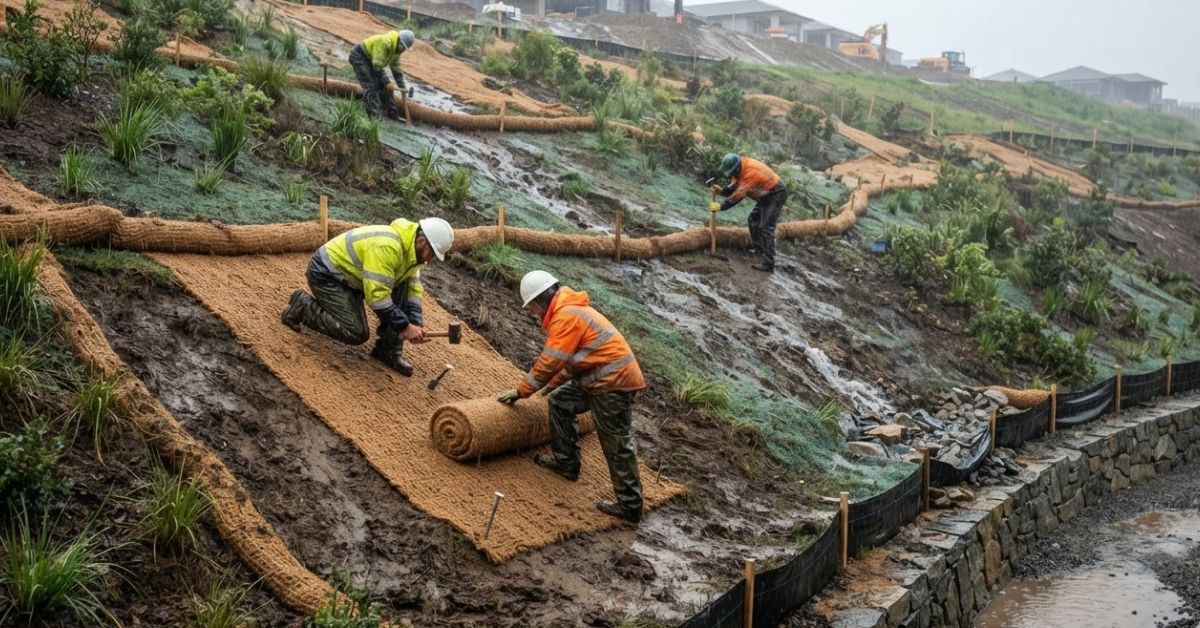
A few hours of heavy rain can leave a yard looking very different. Soil can shift, mulch can wash away, and water may cut small channels through lawns or planting beds. These problems can become more noticeable when the same areas are hit by repeated storms.
An erosion control contractor first looks at why the water is causing trouble. The slope, soil, drainage, and existing landscaping all play a part. From there, the contractor can determine what needs to be changed or protected so the property can handle heavy rainfall more effectively.
Why Heavy Rain Creates Problems for Landscapes?
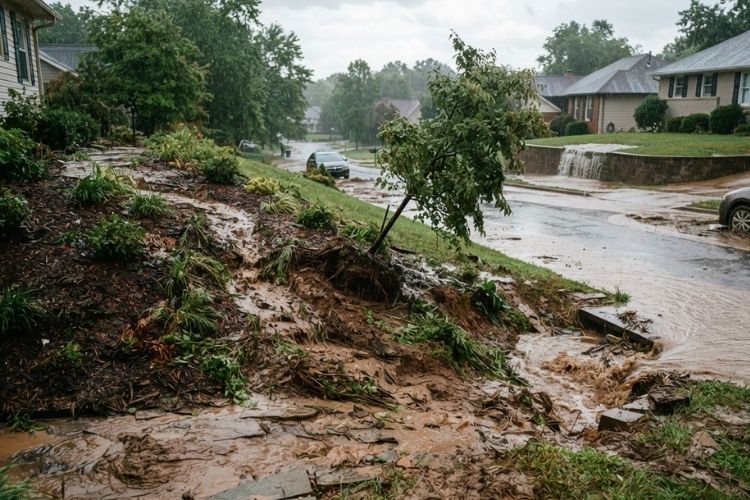
Rain does not affect every part of a property equally. Bare soil, steep slopes, recently planted areas, and low spots are usually more exposed. When rainfall reaches the ground faster than the soil can absorb it, excess water begins moving across the surface.
Repeated storms can lead to Landscape Erosion around trees, shrubs, flower beds, and lawn edges. Soil may also move toward sidewalks, drains, driveways, or neighboring properties. In some cases, roots become exposed, and plants lose the soil that helps keep them stable.
An erosion control contractor can identify these weak points and determine why water is collecting or flowing through certain areas.
Assessing the Property Before Choosing a Solution
A good plan starts with the property itself. Contractors can examine slopes, soil type, drainage routes, low areas, and sections with little vegetation. They may also check whether downspouts, paved surfaces, or driveways are sending extra runoff toward planting beds.
Why is this important? A method that works on a gentle lawn may not be enough for a steep bank. Simply replacing washed-out soil will not solve the issue if water continues to follow the same path.
An erosion control contractor can use these findings to select suitable Erosion Control measures instead of relying on the same treatment for every part of the property.
Slowing Runoff Before It Reaches Vulnerable Areas
When rain starts moving quickly across the ground, it can carry loose soil with it. Contractors can slow this flow by adjusting the grade, creating drainage paths, adding plants, or placing small barriers where needed.
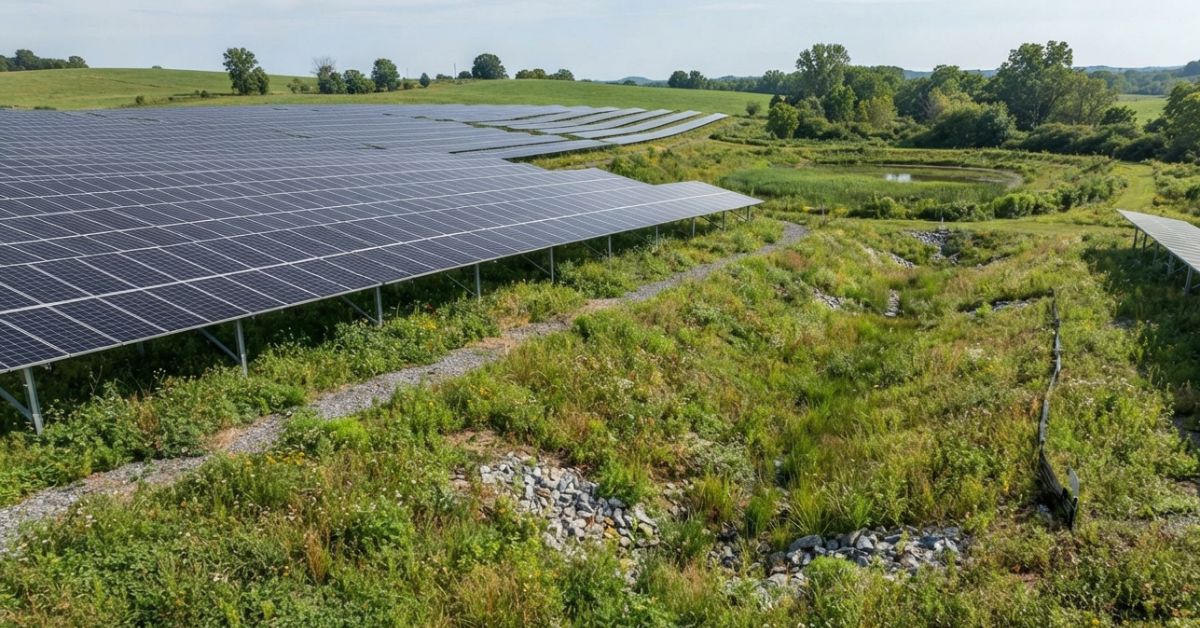
Water does not always need to be stopped. Giving it a safer route and reducing its speed can help limit Rainfall Erosion and keep soil from being washed away. On larger properties, an erosion control contractor in Maben, MS may use a combination of methods to spread out the flow and protect areas that are more exposed.
Keeping Bare Soil in Place
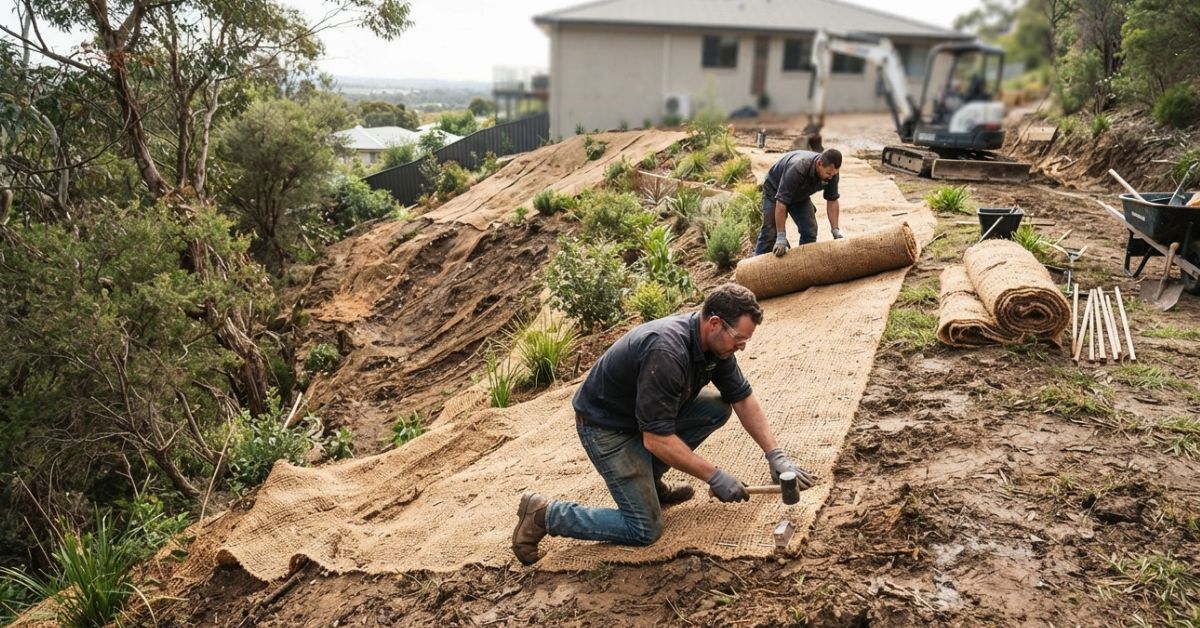
Freshly disturbed soil is particularly vulnerable during heavy rain. Mulch, ground covers, erosion blankets, and temporary stabilization can shield the surface until vegetation becomes established.
Plants can also provide natural support. Grass, shrubs, and other suitable vegetation help hold soil through their root systems while their leaves and stems reduce the direct force of falling rain. These choices can provide useful erosion protection over time.
This type of protection can be especially helpful after grading, construction, planting, or other work that leaves sections of the ground exposed.
Giving Slopes Extra Protection
Sloped areas often need special attention because water gains speed as it travels downhill. Bare patches can quickly develop into channels or ruts when a strong storm hits.
Depending on the site, contractors may use ground covers, erosion blankets, terraces, retaining features, or other measures to improve stability. The right option depends on the slope, soil, drainage pattern, and amount of water moving through the area.
Effective erosion protection should work with the natural shape of the property. Reducing the amount of water reaching a slope at one time can help keep the surface intact and reduce landscape erosion.
Helping Plants Cope With Excess Water
Soil loss is not the only concern during heavy rain. Water that remains around plant roots for too long can also create problems. Some plants tolerate wet conditions better than others, so plant selection can influence how well an area handles repeated storms.
Improving drainage around planting beds may help move excess water away. In other areas, changing the soil or choosing plants that suit the conditions may be more practical.
This wider approach to erosion control protects the soil while also creating better conditions for the plants growing in it.
Using Barriers to Hold Back Sediment
Heavy runoff can carry loose soil toward drains, paths, and other areas of the property. Contractors may use silt fencing, wattles, inlet protection, or similar measures to slow the water and catch sediment before it travels too far.
These measures can also take a beating during strong storms. A damaged barrier or filled sediment trap may need attention before it can work properly again. Checking the site afterward helps catch these issues early and keeps runoff from causing more trouble.
Checking the Property After Heavy Rain
Installing a control measure is not always the end of the job. After a strong storm, the landscape should be checked for fresh channels, exposed roots, displaced mulch, clogged drainage paths, and areas where soil has shifted.
These signs can reveal that water is following a different route than expected. Finding the issue early makes it easier to correct before repeated rainfall erosion creates more extensive damage.
For property owners looking for erosion control solutions, the right approach depends on the cause of the runoff, the condition of the landscape, and how much water the property receives.
Preparing the Landscape for Future Storms
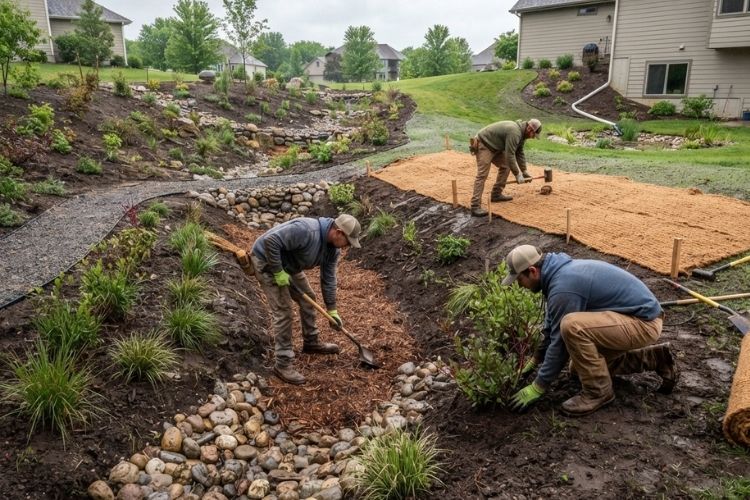
Good protection is not only about fixing damage after a storm. It is also about making the landscape better prepared for the next one. Improving drainage, stabilizing exposed ground, adding suitable vegetation, and changing the path of runoff can all help.
With practical erosion protection and regular upkeep, a property can be better prepared for heavy weather. The right measures can reduce repeated soil loss and help keep lawns, planting beds, and slopes in better condition.
Final Thoughts
Heavy rain can take a toll on landscaping, especially where soil is exposed or water moves quickly across the property. The right Erosion Control approach can help keep soil in place, protect plants, and reduce damage after strong storms.
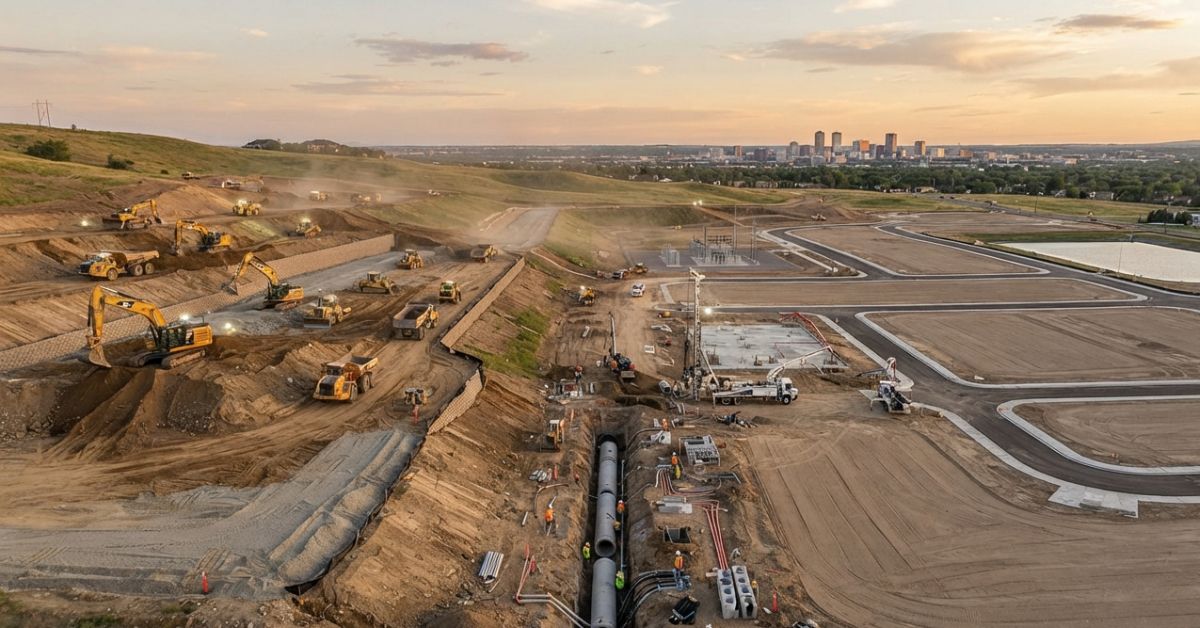
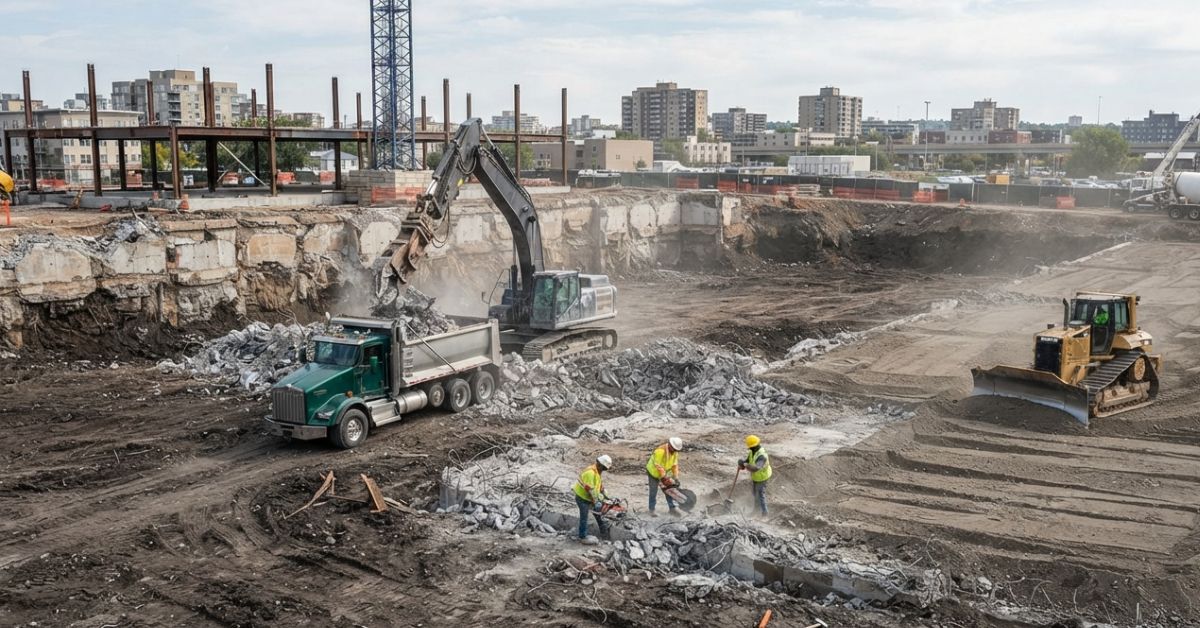
For larger or recurring erosion concerns, professional help can make it easier to address the source of the problem. J.E. Shurden Construction provides erosion control services along with grading, demolition, and civil construction. Its erosion control work includes measures such as stormwater solutions, silt fencing, and sediment basins.
FAQs
Can heavy rain wash away new plants?
It can. Young plants have not had enough time to develop strong roots, so heavy water flow may loosen the soil around them. Mulch and temporary protection can help keep the ground in place until the plants are established.
How do I protect a slope from heavy rain?
It depends on how steep the slope is and where the water comes from. Better drainage, plants with strong root systems, erosion blankets, and small grading changes can all help reduce soil loss.
Should I check erosion controls after a heavy storm?
Yes. Take a look at fences, barriers, drainage areas, and exposed soil after a strong storm. If anything has shifted or become blocked, fixing it early can help prevent more damage.
When should I contact an Erosion Control Contractor?
If the same part of your property keeps washing out, it is worth having it checked. Ongoing erosion can be a sign that water is not draining properly. A contractor can find the source and suggest a practical fix.